Skip to content
Storgy

The Poet Index · Entry 029

William Blake
Poems

Lifespan
1757–1827
Nationality
United Kingdom
Indexed Works
25

It's Blake at his most focused—fourteen lines that express his anger toward poverty, war, and institutional power, and a solid way to see if his perspective resonates with you.

Editorial intro

Storgy editorial

Editorial intro

William Blake made every book he published by hand. No other poet in the English tradition treated the poem as a physical, visual object so completely, and that obsession with making shapes was as significant as any line of verse.

Blake sits at the root of English Romanticism, but he was largely ignored by the literary world of his own time, while poets like Byron and Scott drew the crowds. It took nearly a century for readers to recognize his importance. His influence eventually reached W.B. Yeats, Allen Ginsberg, and Philip Pullman, among others. Most people come to Blake through the *Songs of Innocence and Experience*, and the first surprise is how short and plain those poems feel — until you realize "London" or "The Chimney Sweeper" has conveyed something devastating in just a few stanzas. The second surprise, as you delve deeper, is that beneath the simple lyrics lies an entire private mythology, complete with invented gods representing reason, imagination, and revolt. Blake was a political radical, a self-described visionary, and a one-man publishing operation. The work embodies all of that.

Where to start

How to read William Blake

William Blake is a poet whose work appears simple at first, but reveals greater complexity and depth the longer one engages with it. His short lyric poems, often encountered in school, utilize the rhythms of nursery rhymes and hymns, yet their content addresses serious issues such as child labor, state-sanctioned religion, sexual repression, and the stifling of imagination, all within verses that are almost singable. This tension between an innocent surface and a tumultuous inner world drives much of his most compelling work. Blake wrote in two distinct registers. The first comprises the paired collections Songs of Innocence and Songs of Experience, published in the 1780s and 1790s, where the same subjects and even titles reappear in a darker context. The second register consists of his prophetic books, which feature lengthy, dense mythological epics with invented deities embodying forces like Reason and Imagination in cosmic conflict. While these books are substantial undertakings, this guide focuses primarily on the lyric poetry where most readers are likely to spend their time. Blake worked as an engraver, printing and illustrating his own books by hand, etching images and words onto copper plates. This method is significant because his poems were designed to be experienced alongside visual elements like climbing vines, weeping figures, flames, and sleeping children. Reading his words without those images diminishes the experience, much like hearing a film score without the film. Politically, Blake was a radical who supported the American and French Revolutions and had disdain for the Church of England, the monarchy, the factory system, and organized war. His anger is deeply personal, illustrated by vivid imagery: a soldier's sigh staining a palace wall with blood and a rose devastated from within by an invisible worm. He also professed to see visions throughout his life and constructed his spirituality from the Bible, Swedenborg, and his imagination. Blake died in 1827 with little public recognition. The poets celebrated during his life have largely fallen into obscurity, while Blake's reputation grew slowly, re-emerging through the Pre-Raphaelites, Yeats, and the Beats, with Allen Ginsberg asserting him as a direct ancestor. He earned this legacy, with the short poems serving as an effective entry point complemented by the visual imagery he intended to accompany his text.

The reading path

William Blake’s work in a reading order — what each poem sets up, and where to go next.

  1. The Lamb

    Read this first for its gentle, child-voiced faith — then move straight to The Tyger to feel Blake deliberately shatter that gentleness with a creature the same God presumably also made.

  2. The Chimney Sweeper

    The institutional cruelty at work in that poem — the Church, the State, the family all implicated — flows directly into London, which indicts the whole city at once with the same fury but a harder, more adult eye.

  3. Garden of Love

Storgy Plans

Unlock the full path

Any Storgy plan opens the remaining 2 poems in William Blake’s reading order and the bridging notes between them.

The Works

Sort byYearTitle
  1. 01Infant Joy1789
  2. 02The Divine Image1789
  3. 03The Schoolboy1789
  4. 04A Poison Tree1794
  5. 05Ah! Sun-flower1794
  6. 06The Human Abstract1794
  7. 07Ah SunflowerUndated
  8. 08Auguries of InnocenceUndated
  9. 09EternityUndated
  10. 10Garden of LoveUndated
  11. 11Holy ThursdayUndated
  12. 12Infant SorrowUndated
  13. 13LondonUndated
  14. 14Mock On Mock On Voltaire RousseauUndated
  15. 15Nurse's SongUndated
  16. 16Sick RoseUndated
  17. 17The Chimney SweeperUndated
  18. 18The Crystal CabinetUndated
  19. 19The FlyUndated
  20. 20The LambUndated
  21. 21The Sick RoseUndated
  22. 22The SmileUndated
  23. 23The TygerUndated
  24. 24Tiger Tiger Burning BrightUndated
  25. 25To the Evening StarUndated

Recurring themes

Biographical record

About William Blake

William Blake was born in London in 1757 and, except for three years spent in the coastal village of Felpham, he remained in the city for his entire life. This strong connection to one place contrasts sharply with the expansive imaginative worlds he created in his work.

Blake trained as an engraver, and that skill influenced everything he did. He printed his own books in a method he called "illuminated printing." He sold very few copies during his lifetime, and those he did sell he often hand-coloured. In a very real sense, he was a one-man publishing operation.

His work can be divided into two main categories.

The shorter lyric poems — the ones most readers encounter first — appear deceptively simple. *Songs of Innocence* (1789) and *Songs of Experience* (1794) use straightforward language reminiscent of children's hymns to tackle serious questions about suffering, exploitation, and how institutions can stifle the human spirit. Poems like "London" or "The Chimney Sweeper" are quick reads that leave a strong impact. The other category is his prophetic books: lengthy, complex, mythological epics filled with characters Blake created himself — Urizen, Los, Orc — representing concepts like reason, imagination, and rebellion. These works are genuinely challenging and are read far less often.

Blake was also a political radical. He supported both the American and French Revolutions, and his anger towards the Church of England, child labour, war, and what he called "mind-forged manacles" permeates all his writing. He held deep spiritual beliefs, but his spirituality was not aligned with organized religion — he claimed to have seen visions since childhood, including angels in a tree and the prophet Ezekiel sitting in a field.
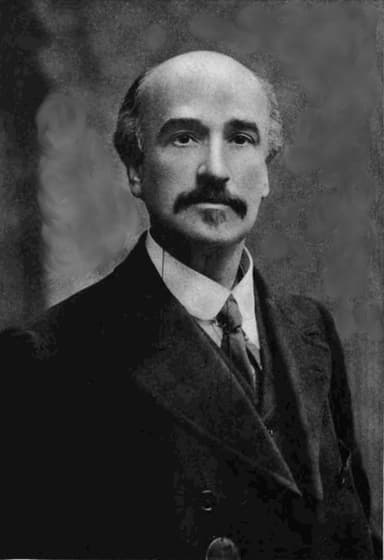
Biographical span
1757Birth
1827Death
1792Median work

Poets in the same orbit

Reader questions

Frequently asked

Why are Blake's poems so short and simple-sounding when his reputation is so large?

Most casual readers are familiar with *Songs of Innocence and of Experience*, which Blake intentionally crafted to resemble nursery rhymes and hymns. The simplicity is intentional — he aimed for a stark contrast between the innocent façade and the grim topics (like child labor, poverty, and institutional cruelty) to convey deeper meaning. Beneath this surface, Blake also created vast mythological epics that are far from simple. The brief poems serve as the entryway; the prophetic books represent the entire house.

What does 'Songs of Innocence and of Experience' actually mean?

Blake published *Songs of Innocence* in 1789, and five years later, he paired it with a new collection, *Songs of Experience*, creating a single book. Many poems appear in both sections as pairs — for example, there are two poems titled "The Chimney Sweeper" and two named "Nurse's Song." The concept is that innocence and experience offer two perspectives on the same world, and neither is fully adequate on its own. Reading the pairs side by side is one of the most enriching experiences with Blake’s work.

Did Blake really see visions?

He claimed he did, consistently, from childhood until his deathbed. He recounted seeing angels in a tree when he was a boy, and he allegedly died while singing about the visions he was experiencing. Whether you interpret that literally or view it as the expression of a deeply imaginative mind, it influenced all his work. His mythology, his imagery, and his belief that imagination is sacred — everything ties back to that assertion.

What are the 'prophetic books' and do I need to read them?

The prophetic books are lengthy, challenging poems — *The Book of Urizen*, *Milton*, *Jerusalem* — where Blake created an entire personal mythology. They include made-up gods and cosmic battles that represent genuine philosophical and political issues. You don't have to read them to enjoy Blake, but if you're curious for more after the lyrics, they're available. Northrop Frye dedicated his career to arguing that these works are some of the most overlooked major pieces in English poetry.

Was Blake famous in his own time?

No. He sold very few copies, received little attention from the literary establishment, and was sometimes regarded as eccentric or insane. The Romantic poets who received acclaim during his lifetime—Byron and Walter Scott—are now much less prominent in the literary canon compared to Blake. His reputation grew almost entirely posthumously, and it wasn't until the twentieth century that he began to be recognized as the major figure he is today.

How does his work as a visual artist connect to his poetry?

They're truly inseparable. Blake both engraved and printed his own books, hand-colouring them, which meant the images and text were crafted together as a cohesive piece. The borders, the figures winding around the words, the colours — everything is integral to the poem. Reading Blake in plain text feels a bit like hearing a film score without the visuals. It’s effective, but you’re missing a crucial element. The illuminated plates are easily found online and are definitely worth exploring along with the poems.

What was Blake's relationship to religion?

Complicated and combative. He was profoundly spiritual and regarded the Bible as a significant source of imagery and meaning, yet he held disdain for organized religion — particularly the Church of England, which he viewed as an instrument of social control. His God is far from comforting; "Urizen," his created deity of cold reason and law, serves as a critique of the traditional Christian God. Blake's spiritual framework was unique and visionary, drawing from the Bible, Milton, Swedenborg, and his own imagination.

Who has Blake influenced?

The list is extensive. W.B. Yeats edited an early edition of his work and was profoundly influenced by his mythological ideas. Allen Ginsberg pointed to Blake as a significant influence and said he heard Blake’s voice in a vision. Philip Pullman's *His Dark Materials* trilogy engages directly with Blake's concepts of innocence, experience, and institutional authority. Jim Morrison even named his band after a line from Blake. He’s one of those writers whose impact reaches well beyond the realm of poetry.