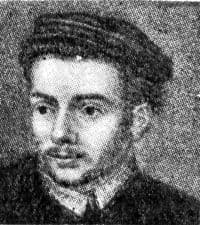
John Davidson was a Scottish poet, playwright, and novelist, born in Barrhead, Renfrewshire, in 1857. He grew up in a strict Calvinist household, with his father serving as an Evangelical Union minister. The tension between rigid faith and a rebellious intellect would echo throughout his writing for the rest of his life.
After spending years as a teacher in Scotland—a role he found both grinding and dispiriting—he moved to London in 1890 to pursue a career as a professional writer. London during the 1890s was the perfect backdrop for someone with his restless, combative energy. He became involved with the Rhymers' Club, a loose collective of poets that included W.B. Yeats and Ernest Dowson, although Davidson always maintained a certain distance from the aesthetic crowd. While they leaned toward delicacy and symbolism, he favored a more robust, argumentative style.
“His Fleet Street Eclogues, published in the early 1890s, established his reputation.”
These poems were unique, bringing pastoral themes into the realm of London journalism, combining classical form with the grit and clamor of urban life. Following this, his Ballads and Songs featured poems like "Thirty Bob a Week," a dramatic monologue from the perspective of a working-class clerk that buzzes with economic frustration and steadfast dignity. T.S. Eliot later acknowledged Davidson's influence on his own work, a connection that's audible.
Davidson was captivated by Friedrich Nietzsche's ideas about will and self-overcoming, and his later work took on a more philosophical and grandiose tone. In the 2000s, he produced a series of ambitious "Testaments"—long, challenging poems that outlined a materialist philosophy wholly rejecting Christianity. These works garnered some admiration but were largely overlooked, leading Davidson to feel bitter about his lack of recognition and ongoing financial struggles.