Despair isn't the same as sadness. Sadness still moves. Despair remains stagnant. It’s the feeling that things won’t improve, that effort is pointless, that the self has somehow gone dark. Poetry is one of the few spaces where this state is treated honestly — not fixed, not brushed aside, just presented and examined.
You’ll encounter despair in the Psalms, in Shakespeare's most somber soliloquies, in the Romantic poets who transformed suffering into art, and in the confessional poets of the twentieth century who wrote about depression long before the term was widely recognized. Sylvia Plath, Gerard Manley Hopkins, Paul Celan, Anna Akhmatova — these writers didn’t approach despair from a safe distance. They wrote from within it, which is precisely why their poems resonate.
What makes a poem about despair worth reading isn’t that it offers comfort — many don’t — but that it helps you feel less alone in the darkness. Someone else has been here. Someone else articulated it. That act of naming, even when the name is harsh, provides a unique form of companionship.
The Reader's Atlas · Chapter The interior
Poems About Despair in the open canon
What do you turn to when everything feels hopeless — when grief has turned into something much heavier, when you can’t see a way forward and aren’t even sure if you want to? That’s where despair resides, and poets have been exploring it for as long as writing has existed.
- Indexed poems
- 123
- Indexed poets
- 38
- Short poems
- 15
§01 Opening
On despair
A reader's preface to the theme — what to listen for as you move through the poems below.
Where to begin with despair
Three ways in01 · Most-read entry
Alone
by Edgar Allan Poe, 1875
Read the line-by-line analysis, themes, and historical context for this entry in Storgy's index.
02 · Editor's pick
Darkness
by George Gordon Byron, 1816
Read the line-by-line analysis, themes, and historical context for this entry in Storgy's index.
03 · Counterpoint
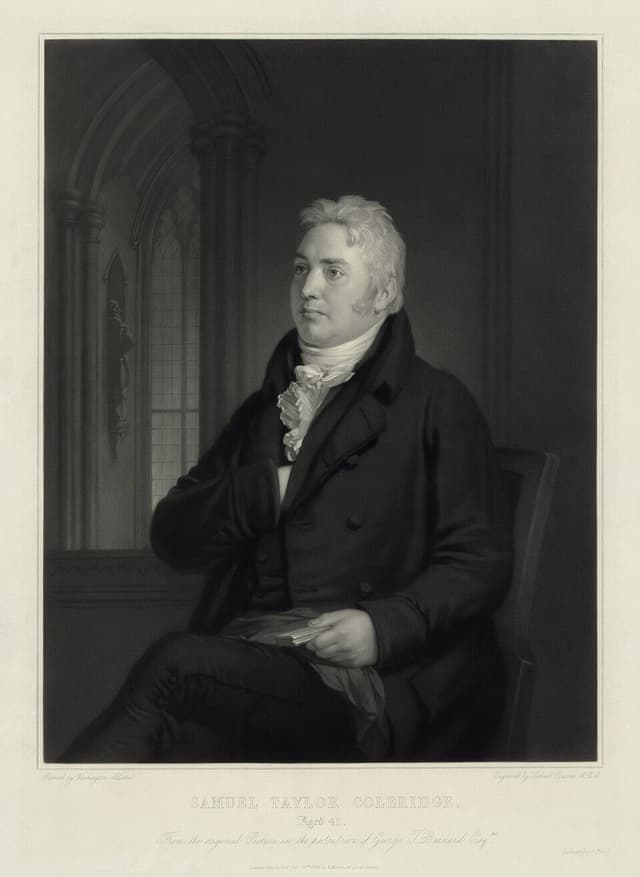
Dejection: An Ode
by Samuel Taylor Coleridge, 1802
Read the line-by-line analysis, themes, and historical context for this entry in Storgy's index.
§03 The index
Every poem in this theme
- 01
Alone
Edgar Allan Poe1875PD - 02
Darkness
George Gordon Byron1816PD - 03
Dejection: An Ode
Samuel Taylor Coleridge1802PD - 04
Futility
Wilfred Owen1918PD - 05
Garden
H. D.1916Excerpt - 06
Gerontion
T. S. Eliot1920Excerpt - 07
Growing Old
Matthew Arnold1867PD - 08
In a London Drawingroom
George Eliot1865PD - 09
Mid-Day
H. D.1916Excerpt - 10
Miniver Cheevy
Edwin Arlington Robinson1907PD - 11
Morning at the Window
T. S. Eliot1917Excerpt - 12
O Me! O Life!
Walt Whitman1867PD - 13
Prayer
H. D.1924Excerpt - 14
Rhapsody on a Windy Night
T. S. Eliot1917Excerpt - 15
Sonnet 29: When, in disgrace with fortune and men’s eyes
William Shakespeare1609PD - 16
The Burial of the Dead
T. S. Eliot1922Excerpt - 17
The Conqueror Worm
Edgar Allan Poe1843PD - 18
The Fire Sermon
T. S. Eliot1922Excerpt - 19
The Hollow Men
T. S. Eliot1925Excerpt - 20
The Human Abstract
William Blake1794PD
The remaining 103 poems about despair are indexed but not yet featured here. Use the search index in the footer to surface them.
Notable poets on despair
Cartography



Reading on the move
Short poems about despair
Twelve lines or fewer — a curated facet for the commute, the inbox, the lock screen. Hand-filtered for length, sequenced by canonical weight.
15
Under 12 lines
§04 Reader's questions
Questions about despair poems
Q.01What is the difference between despair and sadness in poetry?
Answer
Sadness in poems usually reacts to specific events — something occurred, and the speaker is mourning it. In contrast, despair feels more all-encompassing. It’s the sense that the loss or the darkness is unending, that there’s no way out. Poems about despair often carry a stillness or flatness that sadness poems lack.
Q.02Which poets wrote most powerfully about despair?
Answer
Gerard Manley Hopkins penned a series of sonnets — frequently referred to as the 'Terrible Sonnets' — which stand out as some of the most intense expressions of spiritual despair in English literature. Sylvia Plath's Ariel explores similar themes, but from a more personal perspective. Paul Celan, writing after the Holocaust, stretched the limits of language itself. Anna Akhmatova's Requiem captures collective despair with remarkable dignity.
Q.03Can poems about despair actually help someone who is struggling?
Answer
Many readers agree — not because the poems provide answers, but because they validate that the feeling is genuine and survivable enough to be expressed. There's a difference between hearing 'it gets better' and reading a poem that says 'I was here too, in this same darkness.' The latter often feels more authentic.
Q.04What formal features do despair poems often use?
Answer
Broken syntax, lengthy exhalations, repetition, and abrupt pauses are all common features. Some poets employ tight, compressed forms like the sonnet to convey despair pushing against its own limits. Others allow lines to fragment or fade away. The structure often reflects the mental state — either tightly controlled or unraveling.
Q.05Is despair a common theme in religious poetry?
Answer
Absolutely. The Psalms are rich with expressions of despair — 'My God, my God, why hast thou forsaken me?' stands as one of the oldest poems of anguish we possess. Hopkins grappled with God’s silence. Numerous mystics described the 'dark night of the soul,' a profound sense of spiritual emptiness that lies at the core of despair.
Q.06How do poets distinguish despair from nihilism?
Answer
Nihilism argues that nothing holds significance. In contrast, despair often insists that things matter greatly — and that’s part of what makes it so painful. Many poems about despair come from those who deeply desired something but couldn't attain it, or who loved something and lost it. This pain serves as evidence of their care.
Q.07Are there despair poems that end with hope?
Answer
Some do, but the best ones genuinely earn it instead of just adding it on. Hopkins's 'Carrion Comfort' concludes with a hard-won shift towards God. Akhmatova's Requiem achieves a sense of defiant dignity. However, many powerful despair poems don't resolve at all — and that honesty contributes to their lasting impact.
Q.08What's the difference between despair and elegy?
Answer
An elegy is composed for a particular person or thing that has been lost. While despair poems can carry an elegiac tone, despair tends to be more diffuse — it's a persistent state rather than a reaction to a single event. You can create an elegy and emerge from it. In contrast, despair poems often lack a clear resolution.