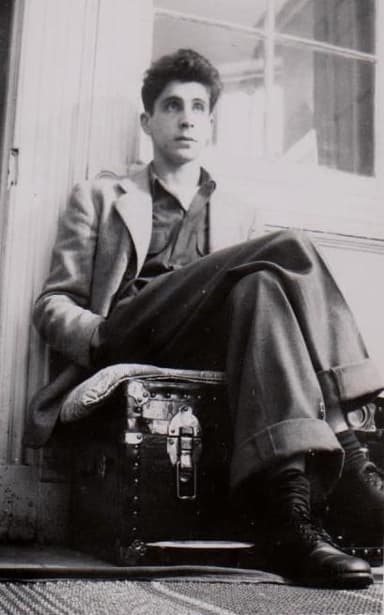
David Gascoyne was born in Harrow, Middlesex, in 1916, and he entered the world of poetry with remarkable speed. By the age of sixteen, he had published his first novel, and at seventeen, he released his debut poetry collection. This extraordinary talent shaped his early career: he quickly became one of the youngest figures at the heart of the British Surrealist movement in the 1930s, approaching it with genuine conviction rather than mere trendiness.
In 1935, still a teenager, Gascoyne published *A Short Survey of Surrealism*, one of the first serious introductions to the movement in English. After spending time in Paris and mingling with André Breton, Paul Éluard, and Salvador Dalí, he returned with a profound grasp of Surrealism's goals—not just its shock value, but its deeper aim to unlock the unconscious and stretch language beyond its conventional boundaries. He also translated French Surrealist poetry into English, performing the crucial but often overlooked task of making those voices accessible to British audiences.
“His poetry from this period is dense, hallucinatory, and imbued with the feeling that the world beneath the visible is more authentic than our everyday experience.”
Yet, Gascoyne was never satisfied with sticking to one style. Through the late 1930s and into the war years, his work evolved toward a more explicitly spiritual and anguished tone. He developed a keen interest in Christian existentialism—drawing from thinkers like Simone Weil and Nikolai Berdyaev—and this focus infused his poetry, giving it a depth and moral gravity that distinguished it from the lighter aspects of Surrealism.
*Poems 1937–1942*, published in 1943 with illustrations by Graham Sutherland, is often regarded as his greatest work. The poems in this collection confront themes of suffering, the body, the crucifixion, and the devastation of the Second World War in ways that resonate deeply rather than come across as theatrical.