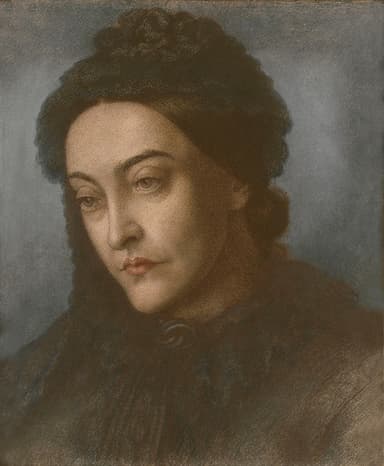
Edith Sitwell was born in Scarborough, Yorkshire, in 1887, into a noble family that offered her little affection. Her parents — Sir George and Lady Ida Sitwell — were largely seen as distant and self-absorbed, leaving Edith feeling like an outsider in her own home. She discovered her true family in literature and later among fellow writers and artists. For much of her early life, she relied on her governess, Helen Rootham, who eventually became her companion in Paris.
As the eldest of the three Sitwell siblings — with Osbert and Sacheverell rounding out the trio — they became one of early twentieth-century Britain’s most discussed literary families. Edith stood out as the most flamboyant of the three. She often donned medieval-style robes, adorned herself with striking jewellery, and crafted a public persona that blurred the lines between performance and identity. Critics who dismissed her work quickly learned to expect her sharp, unrelenting wit in response.
“Her most notable early work was *Façade*, a series of poems designed to be performed alongside music by William Walton.”
The poems were delivered through a megaphone behind a painted curtain, creating a genuine scandal when it premiered in 1923. Some hailed it as brilliant, while others deemed it nonsense. Sitwell remained indifferent to both sides of the debate.
As she continued writing, her poetry underwent a significant tonal shift. The impact of the Second World War deeply affected her, and the poems she penned in reaction — compiled in collections such as *Street Songs* and *The Song of the Cold* — are rich, visionary, and steeped in sorrow. She employed religious themes, alchemy, and mythology to grapple with the realities of destruction and human suffering. These works secured her serious critical acclaim.