Poets are often drawn to faith because writing poetry is itself an act of faith. You put words on a page and trust they'll resonate somewhere genuine in a stranger's heart. You reach for a metaphor and hope it can bear the weight you place on it.
The poems you’ll encounter on this theme vary widely, from devotional hymns to passionate debates with God, from quiet moments of doubt to sudden bursts of belief. Gerard Manley Hopkins found faith in the flight pattern of a falcon. Emily Dickinson kept prodding at it like a sore spot. George Herbert penned poems that were essentially conversations with a God he felt had deserted him—only to realize that He hadn’t. Paul Celan wrote about faith in the aftermath of the Holocaust, which presents one of the toughest challenges to faith.
What makes these poems compelling isn’t that they provide answers. It’s that they genuinely engage with the question. They confront uncertainty head-on, finding words for the feelings most of us struggle to express: what it’s like to believe, to doubt, to lose faith, and occasionally to rediscover it in the most ordinary moments—a winter morning, a child's hand, or a line of poetry that resonates perfectly.
The Reader's Atlas · Chapter Spirit, beauty & world
Poems About Faith in the open canon
What does it mean to believe in something you can't prove? That's the underlying question in nearly every poem about faith. This isn't limited to just religious faith—though many poems explore that territory—but encompasses the broader and more challenging idea: trusting that love will endure, that grief will ease,…
- Indexed poems
- 505
- Indexed poets
- 98
- Short poems
- 124
§01 Opening
On faith
A reader's preface to the theme — what to listen for as you move through the poems below.
Where to begin with faith
Three ways in01 · Most-read entry
Ash Wednesday
by T. S. Eliot, 1930
Read the line-by-line analysis, themes, and historical context for this entry in Storgy's index.
02 · Editor's pick
Compensations
by Alfred Noyes, 1922
Read the line-by-line analysis, themes, and historical context for this entry in Storgy's index.
03 · Counterpoint
Cotton-Wool
by Alfred Noyes, 1907
Read the line-by-line analysis, themes, and historical context for this entry in Storgy's index.
§03 The index
Every poem in this theme
- 01
Ash Wednesday
T. S. Eliot1930Excerpt - 02
Compensations
Alfred Noyes1922Excerpt - 03
Cotton-Wool
Alfred Noyes1907Excerpt - 04
Death Be Not Proud
John Donne1633PD - 05
Easter Wings
George Herbert1633PD - 06
Fashions
Alfred Noyes1922Excerpt - 07
Fishers of Men
Alfred Noyes1907Excerpt - 08
Five Criticisms
Alfred Noyes1922Excerpt - 09
Gerontion
T. S. Eliot1920Excerpt - 10
Good Friday
Christina Rossetti1866PD - 11
Hermes of the Ways
H. D.1916Excerpt - 12
Journey of the Magi
T. S. Eliot1927Excerpt - 13
Laugh and Be Merry
John Masefield1910Excerpt - 14
Lines for a Sun-Dial
Alfred Noyes1922Excerpt - 15
Michael Oaktree
Alfred Noyes1922Excerpt - 16
On a Mountain Top
Alfred Noyes1922Excerpt - 17
On Being Brought from Africa to America
Phillis Wheatley1773PD - 18
Rose Pogonias
Robert Frost1913Excerpt - 19
Sea Gods
H. D.1916Excerpt - 20
Slave and Emperor
Alfred Noyes1918Excerpt
The remaining 485 poems about faith are indexed but not yet featured here. Use the search index in the footer to surface them.
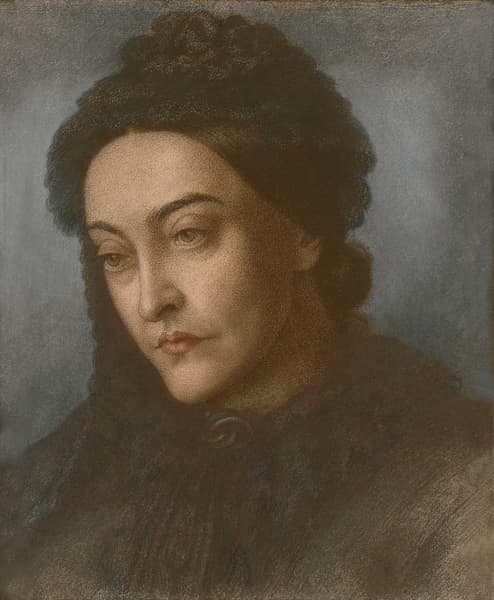
Notable poets on faith
Cartography
Reading on the move
Short poems about faith
Twelve lines or fewer — a curated facet for the commute, the inbox, the lock screen. Hand-filtered for length, sequenced by canonical weight.
124
Under 12 lines
§04 Reader's questions
Questions about faith poems
Q.01What is the difference between poems about faith and poems about religion?
Answer
Religion shapes faith into something tangible — it's about traditions, narratives, and the community that surrounds them. Poems that explore religion often operate within this structure, using its imagery and rituals. In contrast, poems about faith have a broader scope. They can delve into trusting someone else, having hope for the future, or even just finding the motivation to get out of bed when optimism feels out of reach. Many of the most powerful poems navigate the space between these two realms.
Q.02Which poets wrote most powerfully about faith?
Answer
Gerard Manley Hopkins, George Herbert, and John Donne are key figures in the devotional tradition. Emily Dickinson is crucial—she explored faith and doubt with equal passion and left that tension unresolved. More recently, Mary Oliver discovered a sense of faith in nature, while Wendell Berry has thoughtfully addressed belief grounded in community and place. If you're looking for faith that confronts darkness, R.S. Thomas is definitely worth exploring.
Q.03Are there good poems about losing faith?
Answer
Yes, and they're among the most sincere poems in the tradition. Matthew Arnold's "Dover Beach" is a classic — the sea retreating, the 'melancholy, long, withdrawing roar' of faith fading away. Thomas Hardy often wrote about a God he hoped was real. Philip Larkin's "Church Going" features a secular man in an empty church, grappling with its meaning and what it signifies now that it's diminishing.
Q.04Can poems about faith be comforting if I'm not religious?
Answer
Often, yes. The comfort found in these poems typically stems from how attentively they engage with tough questions, rather than the answers they provide. A poem that authentically captures the essence of doubt or the odd endurance of hope can be profoundly reassuring, even if you don’t subscribe to the poet’s particular beliefs. The emotion resonates genuinely, regardless of the underlying theology.
Q.05What's the difference between faith and hope in poetry?
Answer
Hope looks ahead—it's about desiring a particular result. Faith is deeper; it's how you position yourself in the world, a way of navigating uncertainty. Emily Dickinson described hope as 'the thing with feathers,' something light and enduring. In poetry, faith often carries a weight, reflecting a struggle. You can hope without having belief. Faith typically suggests that you've already faced your doubts.
Q.06Why do so many poems about faith involve nature imagery?
Answer
Because nature is where many people experience something akin to faith — not in a church, but while standing before a mountain or observing a bird. Poets like Hopkins and Oliver draw on natural imagery because it feels tangible and direct, unlike theological language, which can often miss the mark. A hawk or a grasshopper can embody belief without needing to make a case.
Q.07Are there poems about faith from non-Christian traditions?
Answer
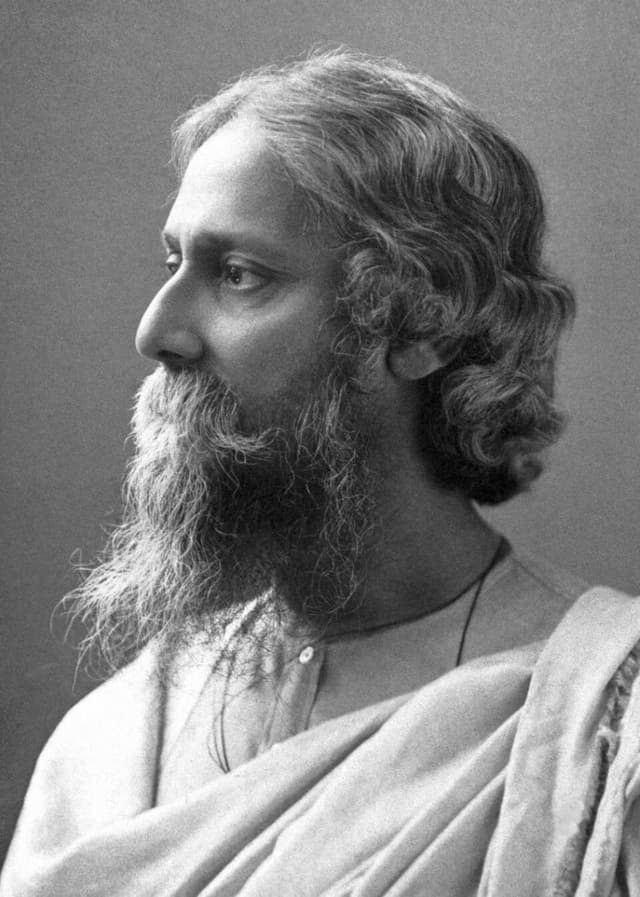
Absolutely. Rumi's poetry, grounded in Sufi Islam, stands out as one of the most beloved forms of devotional writing globally. Rabindranath Tagore explored faith and the divine through the lenses of Hindu and Brahmo beliefs. The Hebrew psalms, which are essentially poems, have left their mark on writers from various backgrounds for thousands of years. Yehuda Amichai captured Jewish faith with a mix of humor and sorrow. This theme resonates across all traditions.
Q.08What formal qualities do poems about faith tend to have?
Answer
Many devotional poems employ strict, formal structures — like sonnets, hymn meters, and complex rhyme schemes. This structure suggests that form itself brings a sense of order, reflecting a belief that the world is cohesive. However, many contemporary faith poems are written in free verse, where the quest for structure parallels the quest for belief. The chosen form often reveals just as much about the poet's stance as the actual content does.