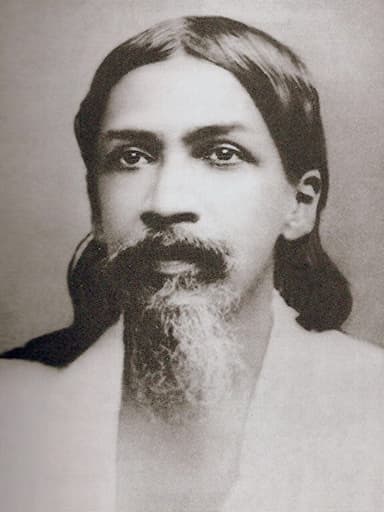
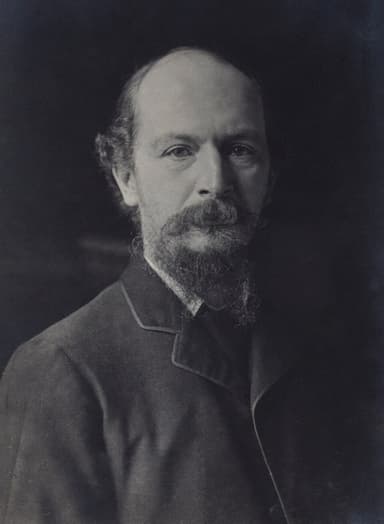
Rabindranath Tagore was born in Calcutta in 1861 into the Tagore family, a prominent intellectual and artistic household during the Bengal Renaissance. His father, Debendranath Tagore, was a philosopher and religious reformer, and the home was filled with music, literature, and lively discussions from an early age. Tagore preferred self-education over formal schooling, finding classrooms stifling; he spent much more time reading and writing than attending classes.
He started writing poetry as a child and was publishing by his teens under the pseudonym Bhanusimha, a name he created to lend his early Bengali verse an ancient feel. The disguise was so convincing that some scholars initially thought the poems were genuine medieval works.
“Tagore's life was marked by remarkable creativity and profound personal loss.”
He experienced the deaths of his wife, two children, and father within a few years in the early 1900s, and this grief deeply influences much of his celebrated work. His collection *Gitanjali* — a series of devotional and lyrical poems — was translated into English by Tagore himself and published in 1912. W.B. Yeats wrote the introduction, and the literary world quickly took notice. In 1913, Tagore became the first Asian to win the Nobel Prize in Literature, and the first non-European recipient as well. He was also the first lyricist to receive the prize in any category.
His influence extended well beyond poetry. He wrote novels, short stories, plays, and essays. He composed thousands of songs, collectively known as Rabindra Sangeet, which remain integral to Bengali musical culture. He established a school at Santiniketan in West Bengal, which later evolved into Visva-Bharati University, founded on his belief that education should occur in nature and through the arts rather than rote memorization.