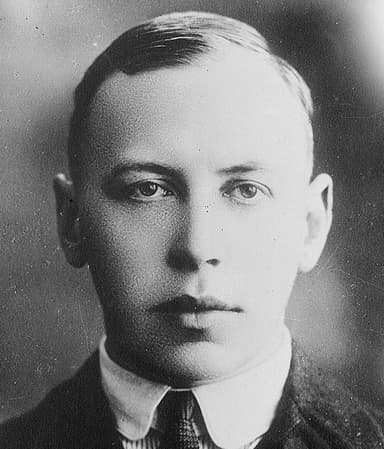
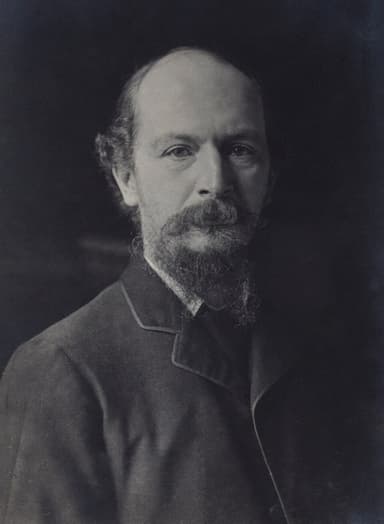
Kahlil Gibran, originally named Jubrān Khalīl Jubrān, was born in 1883 in Bsharri, a small mountain town in what was then Ottoman-controlled Lebanon. His family moved to Boston in 1895, settling in the South End, a neighborhood rich with immigrant communities. It was there that Gibran first encountered English and American artistic culture. As a teenager, he returned to Beirut to formally study Arabic and Lebanese culture before coming back to the United States, where he would spend most of his adult life.
His early years in Boston connected him with the photographer and publisher Fred Holland Day, who recognized Gibran's potential and supported his development as a visual artist. This visual sensibility remained with him throughout his life; Gibran painted and drew consistently, and his artwork reflects the same dreamy, symbolic quality found in his writing. He later studied art in Paris, where he was influenced by Rodin and Blake, two figures whose impact on his work is unmistakable.
“Gibran began his writing career in Arabic, creating prose poetry and essays that established him as a significant figure in the Arab literary scene and a key voice in the Mahjar movement, a school of Arabic literature that emerged from the Arab diaspora in the Americas. His Arabic writings were more politically charged and pointed than what most Western readers are familiar with, often criticizing religious institutions and political corruption in the Arab world.”
In English, he found a different voice: lyrical and parable-like, infused with a kind of universal spirituality that drew from Christianity, Sufism, and Neoplatonism without fully aligning with any of them. This voice reached its zenith in *The Prophet*, published in 1923. The book follows a wise man named Almustafa, who, on the eve of his departure from a city he has called home for years, answers questions from the locals about love, work, death, freedom, and other fundamental aspects of human existence. Initially, it sold modestly, but it later gained immense popularity—especially during the 1960s counterculture—and has remained in print ever since. It has been translated into over 100 languages and stands as one of the best-selling books of all time.
Gibran passed away in New York in 1931 from cirrhosis and tuberculosis at the age of 48. His body was returned to Bsharri, where his former home has been transformed into a museum. He left behind a body of work that continues to evoke mixed reactions—some readers find his prose poetry transcendent, while others see it as vague—but his influence across cultures and languages is nearly unparalleled in modern literature.