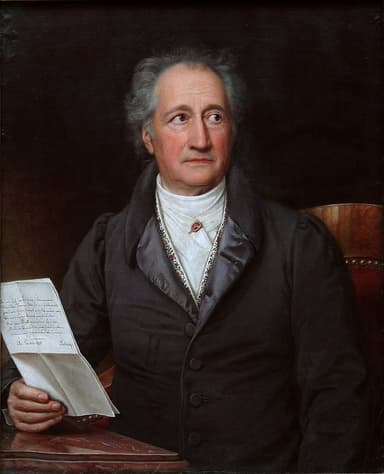
Alexander Sergeyevich Pushkin was born in Moscow in 1799 to a noble family with deep connections to Russian history. His maternal great-grandfather, Abram Petrovich Gannibal, was a general of African descent who served Peter the Great. This mixed heritage influenced Pushkin's sense of identity from a young age, appearing both directly and indirectly in his writing.
He attended the prestigious Tsarskoye Selo Lyceum near St. Petersburg, where he began publishing poetry as a teenager. By the time he graduated in 1817, he was already recognized as a serious literary talent. His early work garnered attention from both readers and the authorities—a risky mix in Tsarist Russia. A poem that circulated in manuscript led to his exile from the capital in 1820, forcing him to spend years in the south of the empire and later in internal exile at his family's estate in Mikhailovskoye.
“Those years away from St. Petersburg became some of his most fruitful.”
He completed significant narrative poems, worked on his verse novel *Eugene Onegin*, and immersed himself in the landscapes and folk traditions of rural Russia, which deeply influenced his writing for the rest of his life. When he was finally allowed to return to Moscow in 1826, it was under the close watch of Tsar Nicholas I, who appointed himself as Pushkin's personal censor—a relationship that proved to be stifling.
In 1831, Pushkin married Natalia Goncharova, who was renowned as one of the most beautiful women in St. Petersburg. Her presence at court attracted the attention of a French officer named Georges d'Anthès. Their flirtation turned into a scandal, and Pushkin, protective of his honor, challenged d'Anthès to a duel. He was shot on January 27, 1837, and succumbed to his injuries two days later at the age of 37.