Poets have explored exile from every perspective: the political refugee carrying a language no one speaks, the immigrant who finds that home has become a term with dual meanings, the person distanced from their own family, or the one who simply grew up and can never go back to childhood. What unites these poems is a double consciousness — the speaker exists in two places simultaneously, grounded where they are while their thoughts drift toward another place.
The best exile poems don’t wallow in despair. Instead, they do something more compelling: they transform the experience of being between worlds into a unique way of seeing. The outsider perceives what the insider takes for granted. Distance sharpens memory until it feels almost surreal. Exile is painful, and poets understand that this pain is also a form of knowledge. If you’re seeking poems that confront displacement without hesitation — that explore longing as something worth contemplating rather than just feeling — you’ve come to the right place.
The Reader's Atlas · Chapter Power & conscience
Poems About Exile in the open canon
What do you reach for when you've been cut off from the place — or the life — that shaped who you are? That's the core question behind nearly every poem about exile. It isn't solely about being forced out of a country. It's the specific pain of knowing that somewhere you belong still exists, yet you can't return, or…
- Indexed poems
- 45
- Indexed poets
- 32
- Short poems
- 8
§01 Opening
On exile
A reader's preface to the theme — what to listen for as you move through the poems below.
Where to begin with exile
Three ways in01 · Most-read entry
1492
by Emma Lazarus, 1883
Read the line-by-line analysis, themes, and historical context for this entry in Storgy's index.
02 · Editor's pick
A Wider View
by Seni Seneviratne, 2007
Read the line-by-line analysis, themes, and historical context for this entry in Storgy's index.
03 · Counterpoint
Egypt
by H. D., 1924
Read the line-by-line analysis, themes, and historical context for this entry in Storgy's index.
§03 The index
Every poem in this theme
- 01
1492
Emma Lazarus1883PD - 02
A Wider View
Seni Seneviratne2007Excerpt - 03
Egypt
H. D.1924Excerpt - 04
I Shall Return
Claude McKay1920PD - 05
Name Journeys
Raman Mundair2003Excerpt - 06
Sea Heroes
H. D.1924Excerpt - 07
The Emigrée
Carol Rumens1993Excerpt - 08
The New Colossus
Emma Lazarus1883PD - 09
The White Man's Burden
Rudyard Kipling1899PD - 10
The Wind Sleepers
H. D.1916Excerpt - 11
Acadia and the Acadians
Henry Wadsworth Longfellow—PD - 12
Aged 22
Amy Lowell—PD - 13
A Jacobite's Exile
Algernon Charles Swinburne—PD - 14
A Jacobite's Farewell
Algernon Charles Swinburne—PD - 15
Another Judge
Henry Wadsworth Longfellow—PD - 16
A Tale of Acadie
Henry Wadsworth Longfellow—PD - 17
At Tomis, in Bessarabia, Near the Mouths of the Danube
Henry Wadsworth Longfellow—PD - 18
By Francisco De Aldana
Henry Wadsworth Longfellow—PD - 19
Canzone
Henry Wadsworth Longfellow—PD - 20
City without a Name
Czesław Miłosz—Excerpt
The remaining 25 poems about exile are indexed but not yet featured here. Use the search index in the footer to surface them.
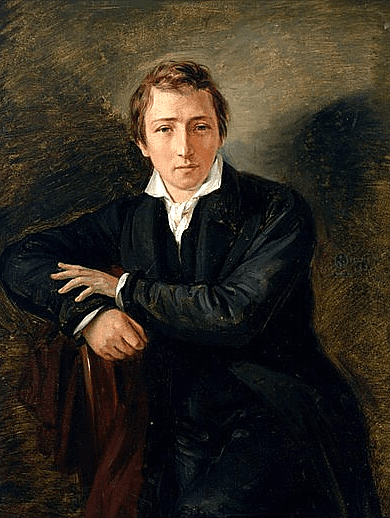
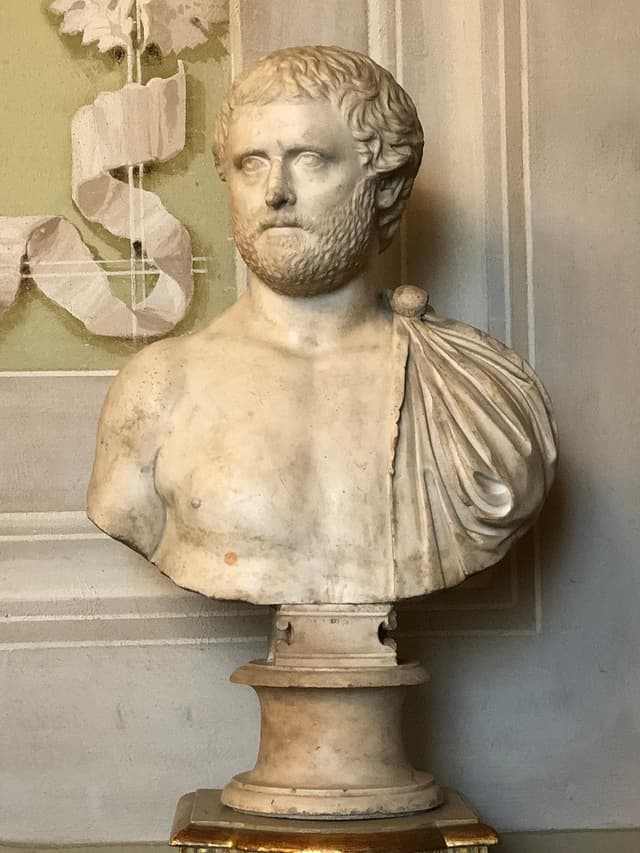
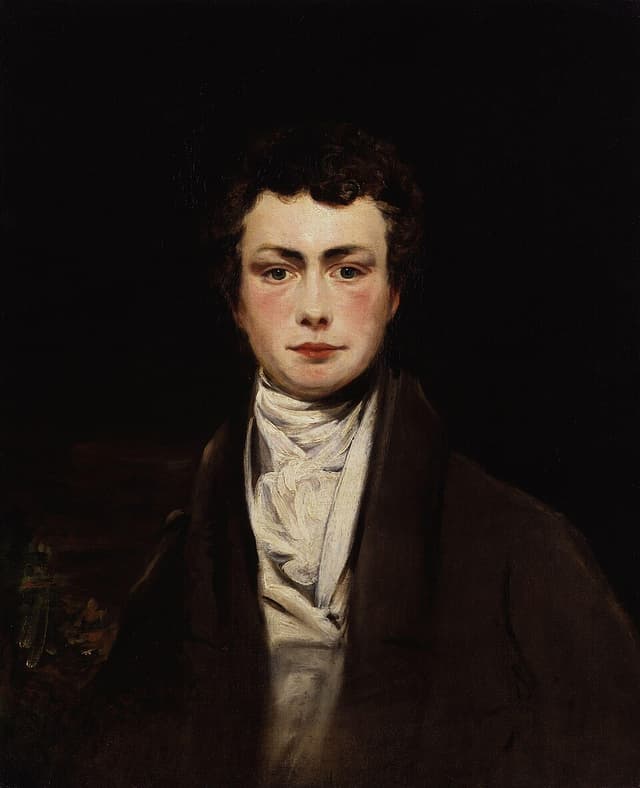
Notable poets on exile
Cartography




Reading on the move
Short poems about exile
Twelve lines or fewer — a curated facet for the commute, the inbox, the lock screen. Hand-filtered for length, sequenced by canonical weight.
8
Under 12 lines
§04 Reader's questions
Questions about exile poems
Q.01What makes a poem an "exile poem"?
Answer
At its heart, an exile poem captures the distance between your current place and where you truly feel you belong. This distance can manifest in various forms: geographic, cultural, temporal, or emotional. What stands out is a speaker who is in between — not entirely present here, and unable to go back there.
Q.02Is exile poetry always political?
Answer
No. Political banishment is one important aspect—consider Ovid writing from the Black Sea, or poets escaping authoritarian regimes. However, exile poetry also includes the immigrant experience, the estrangement from family, the loss of a childhood world, and the sensation of feeling like a stranger within your own culture.
Q.03How do exile poems handle memory?
Answer
Memory in exile poetry is often hyperreal — it's vivid, obsessive, and tinged with a sense of longing. Since the speaker can't return to verify, the place remembered takes on a mythological quality. Poets frequently explore this dynamic, illustrating how memory both safeguards and alters what it encompasses.
Q.04What's the difference between exile and nostalgia in poetry?
Answer
Nostalgia is an emotion; exile is a state of being. Poems about nostalgia reflect a yearning for the past, but the speaker often remains tied to their current reality. In contrast, exile poems convey a sharper tone — they highlight a barrier, be it a physical border, a loss, a severance, or the passage of time, that renders a return unfeasible.
Q.05Which languages and traditions have the richest exile poetry?
Answer
Arabic, Persian, Russian, and Spanish all share rich traditions of exile, often rooted in their histories of conquest, diaspora, and political upheaval. Latin poetry introduced us to Ovid's Tristia. The twentieth century, marked by wars, revolutions, and mass migrations, saw the emergence of a vast array of exile poetry across nearly every literary tradition.
Q.06Can someone write an exile poem about a place they've never physically left?
Answer
Absolutely. Inner exile — the sensation of being a stranger in your own country, city, or family — is a genuine and well-documented experience. Poets from marginalized communities frequently express feelings of being exiled from the mainstream culture they encounter every day. While the geography is internal, the sense of estrangement is just as intense.
Q.07Why do so many exile poems focus on language?
Answer
Because language is the most portable piece of home you carry with you. When you lose your community of speakers or find yourself surrounded by a language that isn’t yours, the loss feels deeply personal in a way that losing a landscape does not. Many poets in exile write about their mother tongue as if it were a person or a place—something they’re striving to keep alive.
Q.08Is there hope in exile poetry, or is it mostly grief?
Answer
Both can appear in the same poem. Exile poetry can be mournful, angry, and sometimes even darkly humorous. Some poets discover that being displaced offers them a freedom—free from expectations and a fixed identity—that they wouldn't exchange. Grief and this unusual gift often exist side by side.