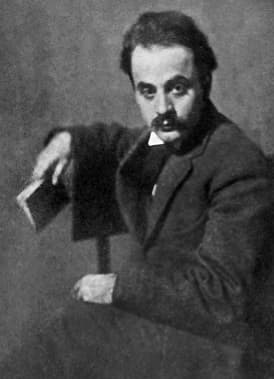
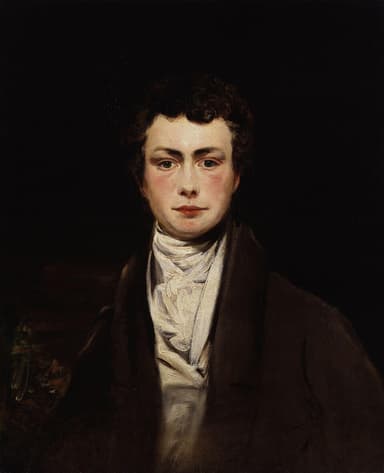
Heinrich Heine was born in Düsseldorf in 1797 to a Jewish family trying to navigate the complex social landscape of early 19th-century Germany. His formative years were marked by the struggle between his Jewish identity and the surrounding Christian culture—a conflict he never truly reconciled. In 1825, he converted to Lutheranism, a decision he later referred to as "the ticket of admission into European culture," though he remained conflicted about it for the rest of his life.
He studied law in Göttingen and Berlin, where he encountered the philosopher Hegel, whose ideas significantly influenced his thinking. However, law was never his true passion. His first major collection, *Buch der Lieder* (Book of Songs), published in 1827, established his reputation throughout the German-speaking world. The poems were lyrical and romantic, infused with irony that distinguished him from the pure sentimentality of the Romantic movement he was associated with.
“That irony often landed him in trouble. Heine had a keen political edge, and the German authorities were well aware of it.”
In 1831, he relocated to Paris, initially to cover the Saint-Simonian movement as a journalist, but he ended up staying for good. He spent the remainder of his life in France, writing in both German and French, becoming a vital cultural bridge between the two nations—explaining German philosophy to French audiences and French politics to Germans.
Paris was a fitting backdrop for him. He mingled with radicals, formed a friendship with Karl Marx, and continued to produce poetry, prose, and political commentary that frequently faced bans in German states. His later works took on a darker and more satirical tone, particularly in *Deutschland: Ein Wintermärchen* (Germany: A Winter's Tale, 1844), a sharp verse travelogue reflecting on a return trip home.