Nature has been a cornerstone of poetry since the very beginning. It appears in ancient Chinese verses, the odes of Keats, the concise haiku of Bashō, and the keen observations of Mary Oliver. What sustains its relevance as a theme isn't just the scenery — it's that the natural world provides poets with a lens through which to explore everything else: time, mortality, beauty, loneliness, wonder, and the peculiar experience of being aware on this spinning planet.
The most powerful nature poems go beyond mere descriptions. They use a river, a hawk, or a patch of moss as a gateway into deeper emotions. A poem about geese flying south seldom focuses only on the geese. A poem reflecting on a dead oak often speaks to more than just a tree.
This is what gives the theme such breadth. Nature poetry can be soft and contemplative, or it can express rage — regarding climate change, loss, or the impact humans have on the land. It might focus on a single insect or stretch out to encompass geological eras. Whatever draws you in, there’s a poem here that resonates with your experience.
The Reader's Atlas · Chapter Spirit, beauty & world
Poems About Nature in the open canon
What is it about the natural world that keeps drawing poets in? Those seeking nature poems often look for something specific — maybe a feeling they experienced while standing in a forest, watching a storm approach, or spotting the first crocus of spring. They want reassurance that someone else felt the same way and…
- Indexed poems
- 857
- Indexed poets
- 140
- Short poems
- 104
§01 Opening
On nature
A reader's preface to the theme — what to listen for as you move through the poems below.
Where to begin with nature
Three ways in01 · Most-read entry
A Bird, came down the Walk
by Emily Dickinson, 1891
Read the line-by-line analysis, themes, and historical context for this entry in Storgy's index.
02 · Editor's pick
Acceptance
by Robert Frost, 1928
Read the line-by-line analysis, themes, and historical context for this entry in Storgy's index.
03 · Counterpoint
Acon
by H. D., 1924
Read the line-by-line analysis, themes, and historical context for this entry in Storgy's index.
§03 The index
Every poem in this theme
- 01
A Bird, came down the Walk
Emily Dickinson1891PD - 02
Acceptance
Robert Frost1928Excerpt - 03
Acon
H. D.1924Excerpt - 04
After Apple-Picking
Robert Frost1914Excerpt - 05
Alone
Edgar Allan Poe1875PD - 06
Ancient Music
Ezra Pound1916Excerpt - 07
Anecdote of the Jar
Wallace Stevens1919PD - 08
A Noiseless Patient Spider
Walt Whitman1868PD - 09
A Red, Red Rose
Robert Burns1794PD - 10
Ars Poetica
Archibald MacLeish1926Excerpt - 11
Bayonet Charge
Ted Hughes1957Excerpt - 12
Birches
Robert Frost1915Excerpt - 13
Break, Break, Break
Alfred, Lord Tennyson1842PD - 14
Circe
H. D.1921Excerpt - 15
Climbing My Grandfather
Andrew Waterhouse2000Excerpt - 16
Crossing Brooklyn Ferry
Walt Whitman1856PD - 17
Cuckoo Song
H. D.1924Excerpt - 18
Darkness
George Gordon Byron1816PD - 19
Dejection: An Ode
Samuel Taylor Coleridge1802PD - 20
Demeter
H. D.1921Excerpt
The remaining 837 poems about nature are indexed but not yet featured here. Use the search index in the footer to surface them.
Notable poets on nature
Cartography

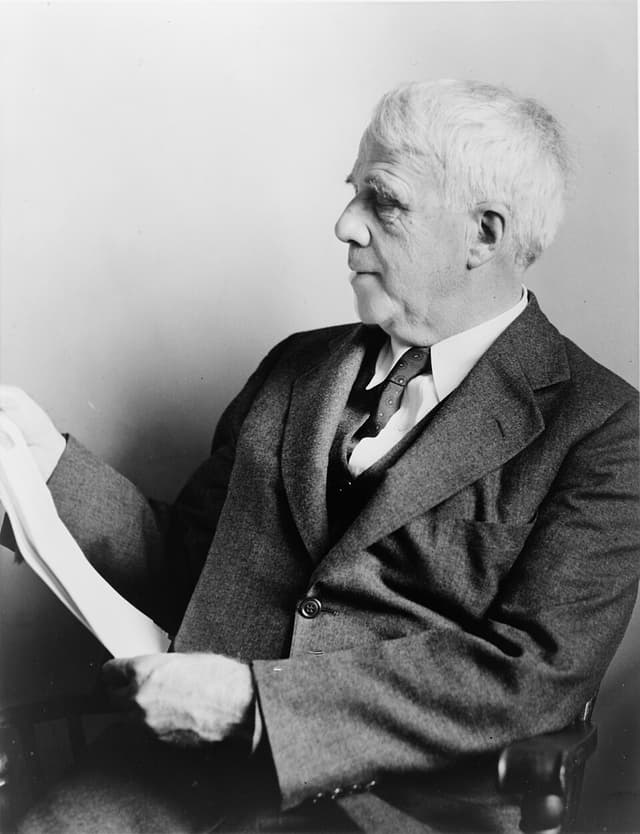
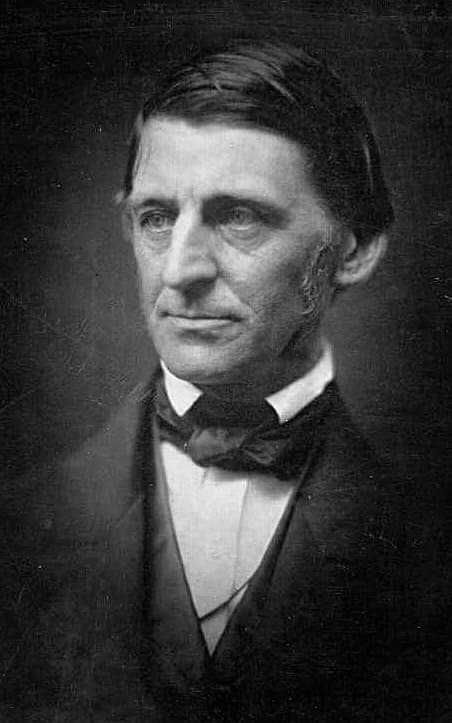
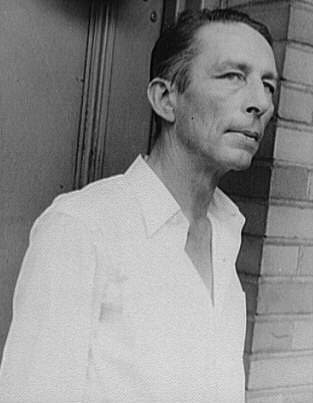

Reading on the move
Short poems about nature
Twelve lines or fewer — a curated facet for the commute, the inbox, the lock screen. Hand-filtered for length, sequenced by canonical weight.
104
Under 12 lines
§04 Reader's questions
Questions about nature poems
Q.01Why do so many poets write about nature?
Answer
The natural world is one of the few subjects that everyone can connect with, no matter their culture or the era they live in. It provides poets with a tangible, sensory vocabulary to express abstract emotions like grief, joy, and the passage of time, which can be difficult to articulate otherwise.
Q.02What is a nature poem, exactly?
Answer
Any poem that places the natural world at its core — not merely as a backdrop, but as the main subject or perspective. This encompasses everything from an intimate portrayal of a single flower to a broad reflection on geological time.
Q.03Who are the most famous nature poets?
Answer
William Wordsworth and John Keats stand out as iconic figures in the Romantic tradition. Mary Oliver is likely the most popular nature poet from the late 20th century. Other notable poets in this realm include Gerard Manley Hopkins, Matsuo Bashō, Ted Hughes, Wendell Berry, and Robinson Jeffers.
Q.04What is the difference between nature poetry and Romantic poetry?
Answer
Romanticism is a historical movement that lasted from about 1780 to 1850, focusing on nature as a central theme. However, nature poetry encompasses a much wider range. Poets have been exploring the natural world long before the Romantic era and continue to do so today. Romantic poetry represents just one part of this broader tradition, not the whole picture.
Q.05Are there nature poems that deal with climate change and environmental loss?
Answer
Yes, and this is one of the fastest-growing areas in contemporary poetry. Poets such as Camille Dungy, Craig Santos Perez, and Juliana Spahr tackle themes like ecological damage, extinction, and the politics surrounding land and water.
Q.06What makes a nature poem more than just a description of scenery?
Answer
The best nature poems use the physical world to tap into deeper emotions or philosophical ideas. The scene matters because it reveals something about human experience—or questions whether humans are really the main focus of the story.
Q.07What is 'ecopoetry'?
Answer
Ecopoetry refers to poems that thoughtfully explore ecological systems and environmental ethics, rather than merely using nature as a beautiful backdrop. These poems are typically politically conscious and frequently challenge the divide between humans and the non-human world.
Q.08Can haiku be considered nature poetry?
Answer
Sure thing. The haiku tradition, originating from Japanese poetry, centers on keen observation of the natural world — a distinct season, a fleeting moment, a solitary image. It's one of the most rigorous forms of nature poetry out there.