Poets have used dreams for various purposes. Sometimes, a dream serves as a refuge—a place where the dead return, where lost love can be momentarily found, where the world feels more compassionate than it does during the day. At other times, dreams represent the opposite: a realm filled with dread, where the mind confronts what it cannot face while awake. And sometimes, the dream itself isn’t the focal point; rather, it’s the moment of awakening—the disorienting threshold when you’re unsure which reality is true.
There's also a rich tradition of poets intertwining the concepts of dreaming and imagination. To dream, in this context, means to hope, to envision, to reject the world as it is. Langston Hughes turned this idea into a political statement, Keats infused it with sensory richness, and Poe approached it with a gothic and mournful tone. The diversity within this theme is vast, which is part of what keeps it vibrant in poetry throughout the ages and across cultures.
The Reader's Atlas · Chapter The interior
Poems About Dreams in the open canon
What do our dreams really mean, and why do so many poets keep coming back to them? This question lies at the core of any exploration of poems about dreams. It’s understandable—dreams are one of the few experiences that all humans share, yet each person's dreams are unique. They can be vivid and then vanish in an…
- Indexed poems
- 79
- Indexed poets
- 17
- Short poems
- 8
§01 Opening
On dreams
A reader's preface to the theme — what to listen for as you move through the poems below.
Where to begin with dreams
Three ways in01 · Most-read entry
A Dream Within a Dream
by Edgar Allan Poe, 1849
Read the line-by-line analysis, themes, and historical context for this entry in Storgy's index.
02 · Editor's pick
After Apple-Picking
by Robert Frost, 1914
Read the line-by-line analysis, themes, and historical context for this entry in Storgy's index.
03 · Counterpoint
At Baia
by H. D., 1921
Read the line-by-line analysis, themes, and historical context for this entry in Storgy's index.
§03 The index
Every poem in this theme
- 01
A Dream Within a Dream
Edgar Allan Poe1849PD - 02
After Apple-Picking
Robert Frost1914Excerpt - 03
At Baia
H. D.1921Excerpt - 04
Disillusionment of Ten O'Clock
Wallace Stevens1915PD - 05
He Wishes for the Cloths of Heaven
W. B. Yeats1899PD - 06
Mowing
Robert Frost1913Excerpt - 07
Nippon
Alfred Noyes1907Excerpt - 08
Agro Dolce
James Russell Lowell—PD - 09
Aladdin
James Russell Lowell—PD - 10
A Love Song
D. H. Lawrence—PD - 11
A Rhine-Land Drinking Song
Eugene Field—PD - 12
Asia, Alone
Percy Bysshe Shelley—PD - 13
Atropos
Henry Wadsworth Longfellow—PD - 14
Beautiful Dreamer
Stephen Foster—PD - 15
Castles in Spain
Henry Wadsworth Longfellow—PD - 16
Chaucer
John Keats—PD - 17
Child and Mother
Eugene Field—PD - 18
Chorus of Dreams from the Gate of Horn
Henry Wadsworth Longfellow—PD - 19
Chorus of Dreams from the Ivory Gate
Henry Wadsworth Longfellow—PD - 20
Chrysaor
Henry Wadsworth Longfellow—PD
The remaining 59 poems about dreams are indexed but not yet featured here. Use the search index in the footer to surface them.
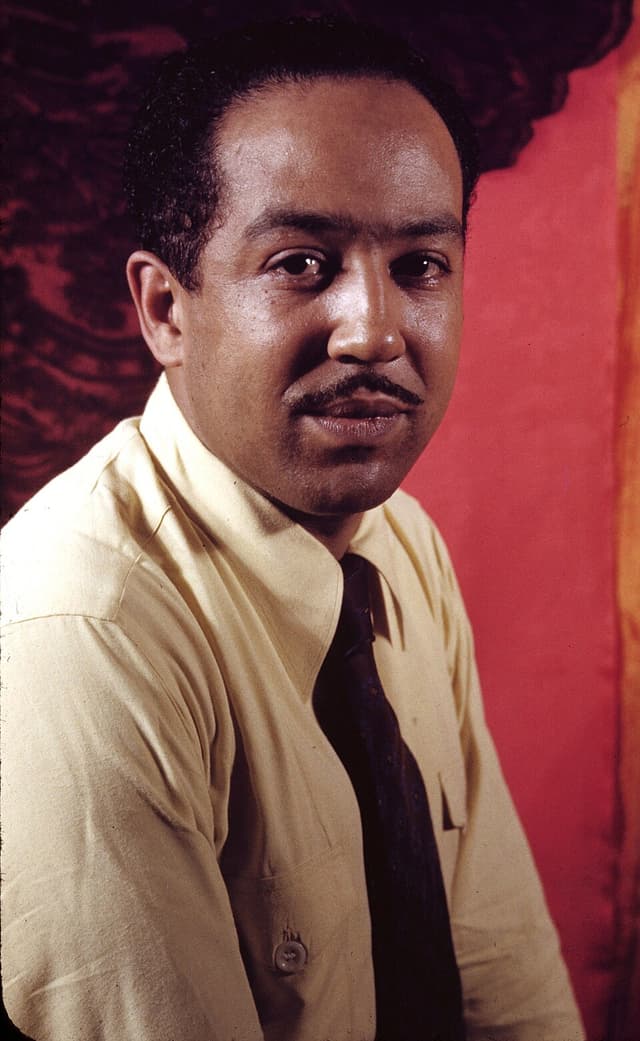
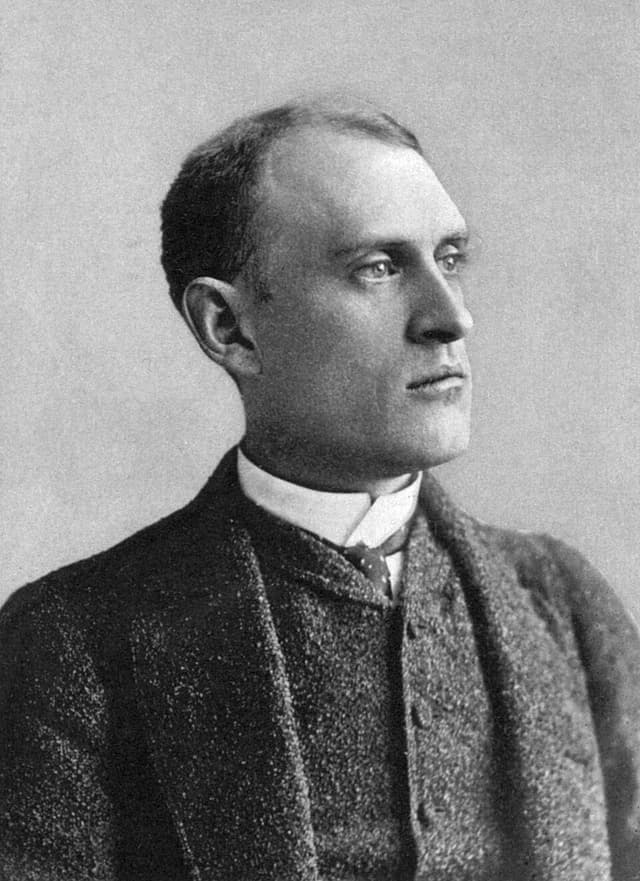
Notable poets on dreams
Cartography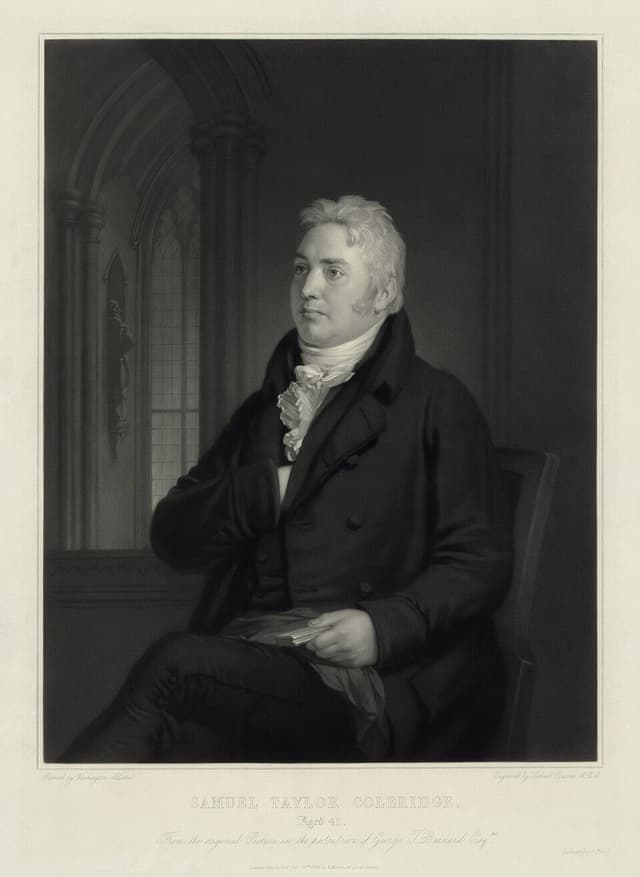

Reading on the move
Short poems about dreams
Twelve lines or fewer — a curated facet for the commute, the inbox, the lock screen. Hand-filtered for length, sequenced by canonical weight.
8
Under 12 lines
§04 Reader's questions
Questions about dreams poems
Q.01Why do poets write about dreams so often?
Answer
Dreams allow poets to effortlessly bend the rules of logic and time. In a dream, a deceased grandmother might share a meal at the kitchen table, a city could be submerged, and none of this requires justification. This kind of freedom is incredibly valuable for uncovering emotional truths that simple descriptions often miss.
Q.02What is the most famous poem about dreams?
Answer
A few poems vie for that title. Langston Hughes's "A Dream Deferred" is likely the most commonly taught in English classes. Edgar Allan Poe's "A Dream Within a Dream" follows closely. John Keats's "Ode to a Nightingale" has blurred the line between dreaming and waking in a way that has influenced readers for two centuries.
Q.03What is the difference between a dream poem and a vision poem?
Answer
The distinction isn't always clear, but a dream poem typically arises from the unconscious experience of sleep—characterized by its oddities and lack of control. In contrast, a vision poem is more intentional: the speaker is awake, seeking something that is either imagined or foretold. Medieval poets such as Langland employed the dream-vision as a structured genre that blended both elements.
Q.04How do poets capture the feeling of forgetting a dream?
Answer
Often through fragmentation — broken syntax, images that cut off before they resolve, and a sudden shift in tense. The poem captures the act of forgetting instead of merely describing it. Samuel Taylor Coleridge's note about "Kubla Khan" — that he lost the rest of the poem when interrupted — serves as a performance of that very vanishing.
Q.05Are there poems about lucid dreaming?
Answer
Not many people use that exact term since it’s fairly new, but the feeling of being aware in a dream appears in surrealist poetry and in writers like Jorge Luis Borges, whose poems and prose continually explore the question of who is dreaming whom.
Q.06What poetic forms work best for dream poems?
Answer
Free verse is popular because dreams don’t fit neatly into structure. However, the sonnet can be effective as well—its turn (the volta) reflects that moment in a dream when everything changes. Prose poems are also a good fit, as dreams often follow a narrative logic that feels just a bit off from reality.
Q.07How do poems about dreams differ from poems about sleep?
Answer
Sleep poems often explore themes of rest, surrender, and the quieting of the body, frequently touching on peace or death as a counterpart. In contrast, dream poems are more dynamic: they depict events, emotions, fears, or desires. The dreaming mind remains engaged, and that journey is what the poem captures.
Q.08Can a poem itself be described as a dream?
Answer
Many poets have suggested this idea, or at least hinted at it. The notion is that poetry and dreaming can sidestep the rational mind, offering something deeper or more bizarre than regular thought. Surrealist poets embraced this concept, employing automatic writing in an attempt to access the same wellspring as the unconscious dream state.