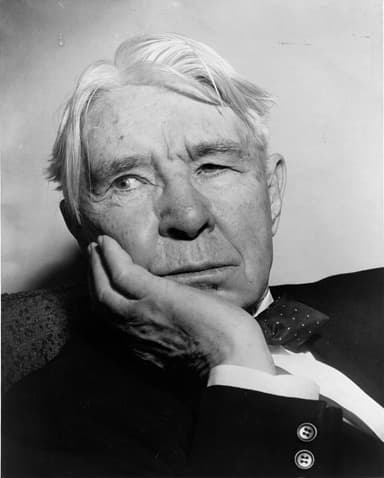
Robert Bly was born in 1926 in Madison, Minnesota, to Norwegian-American farmers—a background that profoundly influenced his writing. He briefly attended St. Olaf College before joining the Navy, then transferred to Harvard, graduating in 1950 with classmates like Donald Hall and Adrienne Rich. After a few years in New York trying to find his voice as a writer, he received a Fulbright grant to Norway in 1956. There, he discovered a tradition of image-driven, introspective poetry—especially the works of Tomas Tranströmer and Pablo Neruda—that transformed his approach to writing.
Once back in Minnesota, Bly launched a literary magazine called *The Fifties* (which evolved into *The Sixties* and then *The Seventies*), and it became a significant force in American poetry. Through the magazine, he promoted what he termed "deep image" poetry: work that skips over logical argumentation and taps into the unconscious with striking, unexpected imagery. This platform also introduced many American readers to Latin American and European poets for the first time. Bly spent decades translating writers such as Neruda, Rilke, Hafez, and Kabir, viewing this work as integral to his mission alongside his own poetry.
“During the Vietnam War, Bly emerged as one of the most outspoken anti-war poets in the country.”
He co-founded American Writers Against the Vietnam War, and when he received the National Book Award for Poetry in 1968 for *The Light Around the Body*, he donated the prize money to the draft resistance movement and used his acceptance speech to criticize the publishing industry's silence regarding the war. This was a genuinely risky stance at that time.
In later years, Bly shifted his focus to cultural work. His 1990 book *Iron John: A Book About Men*, which interprets a Grimm fairy tale as a guide to male psychological development, became an unexpected hit—spending 62 weeks on the *New York Times* bestseller list and serving as a foundational text for the mythopoetic men's movement. He hosted wilderness retreats and drumming circles that drew both dedicated followers and significant ridicule, yet the core concern—that modern men had lost touch with something profound and essential within themselves—was one he took to heart throughout his life.