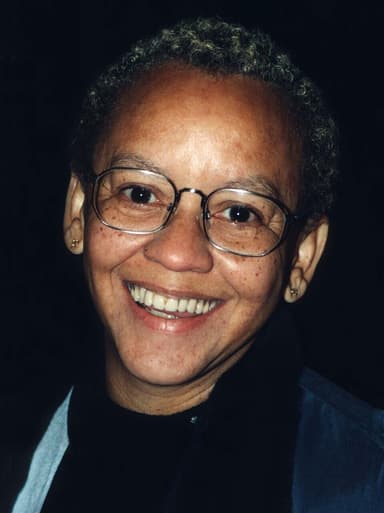
Louise Erdrich was born in 1954 in Little Falls, Minnesota, and grew up in Wahpeton, North Dakota, where her parents both taught at a Bureau of Indian Affairs school. Her father was German-American, and her mother was part Ojibwe, a blend that influences all her writing. As an enrolled citizen of the Turtle Mountain Band of Chippewa Indians in North Dakota, this connection is central to her work.
She attended Dartmouth College, where she met anthropologist Michael Dorris, who later became her literary partner and husband. After that, she earned an MFA from Johns Hopkins. In her early post-graduate years, she took on various jobs — teaching, lifeguarding, and flag-signaling for construction — all while continuing to write.
“Her debut novel, *Love Medicine*, was published in 1984 and won the National Book Critics Circle Award.”
It introduced a distinctive voice in American fiction, rooted in the fictional Ojibwe reservation communities of North Dakota, spanning generations, and blending tragedy with dark humor. She has since created one of the most extensive bodies of work in contemporary American literature, forming a loose cycle of interconnected novels that includes *The Beet Queen*, *Tracks*, *The Plague of Doves*, and *The Night Watchman*, which won the Pulitzer Prize for Fiction in 2021.
Erdrich began her journey in poetry, and it has remained an integral part of her work. Her poems reflect the same themes found in her fiction — land, history, the violence experienced by Indigenous people, and the enduring nature of family and memory — but they do so with greater immediacy and impact. A single poem from Erdrich can encapsulate the depth of an entire chapter of historical reflection.