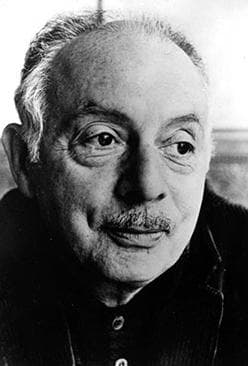
Seamus Heaney was born in 1939 on a farm in County Derry, Northern Ireland, as the eldest of nine children. His upbringing on the land influenced everything — the scent of turned earth, the heft of a spade, and the rhythms of rural Catholic life became the foundation of his poetry. He studied at Queen's University Belfast, where he connected with a group of writers who would help shape Irish poetry for a generation.
His first collection, *Death of a Naturalist* (1966), introduced a poet capable of making the everyday world feel both charged and unusual. The book received immediate critical acclaim, and Heaney spent the following decades crafting a body of work that navigated between the intimate and the political, the personal and the mythological.
“Experiencing the Troubles in Northern Ireland put significant pressure on his writing.”
He grappled openly with the responsibilities of a poet in relation to history and violence — questioning whether silence implies complicity and if elegy is sufficient. Collections like *North* (1975) tackled these issues head-on, using the Iron Age bog bodies found in Scandinavia to explore themes of ritual killing, sacrifice, and the deep roots of sectarian violence. This poetry sparked considerable debate, earning praise from many while facing criticism from those who felt it romanticized suffering.
In 1972, he moved his family to the Republic of Ireland, a choice that carried its own political implications. He later took up a professorship at Harvard and was elected Professor of Poetry at Oxford, but he never became a poet defined by institutions. His voice remained grounded in the specific — a particular field, a particular grief, a particular face.