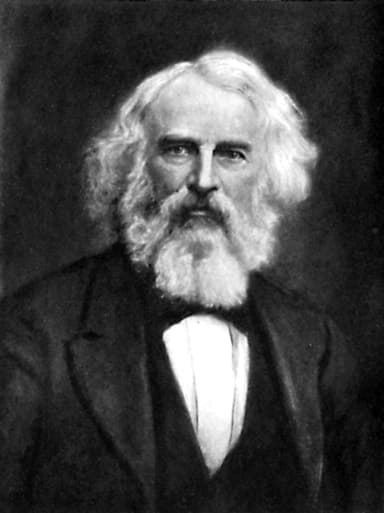
Mary Ann Evans was born in 1819 in Nuneaton, Warwickshire, a rural area in the English Midlands that would influence much of her writing. From a young age, she was an avid reader, and her intellectual talents were evident early on. However, educational opportunities for women at that time were quite limited. She taught herself several languages—German, Latin, Greek, and Hebrew—and eventually relocated to London, where she worked as a writer and editor for the Westminster Review, a prominent intellectual journal of her time.
Evans chose the pen name George Eliot for a practical reason: she wanted her fiction to be taken seriously and understood that women writers were often dismissed or relegated to light domestic stories. The name proved effective. Her first novel, *Adam Bede*, published in 1859, became a sensation, leading readers to speculate for months about the true identity of the enigmatic George Eliot.
“Her personal life was unconventional for the Victorian era.”
She spent over twenty years with the philosopher and critic George Henry Lewes, who was still legally married to another woman and unable to divorce due to the laws of the time. This relationship alienated her from many acquaintances, including her brother Isaac, who completely severed ties with her. Despite this, she and Lewes were reportedly very happy together. Following Lewes's death in 1878, she was heartbroken. Two years later, she married John Walter Cross, who was twenty years younger, and sadly passed away later that same year, in 1880.
While she is mainly remembered as a novelist—*Middlemarch* is often cited as one of the greatest English-language novels—Eliot also wrote poetry throughout her life. Her poetry shares the same qualities as her prose: moral seriousness, psychological depth, and a genuine understanding of how ordinary lives can carry significant weight. She wasn't a poet in pursuit of beauty for its own sake; instead, she focused on themes of obligation, failure, forgiveness, and the challenge of living authentically in a world that seldom acknowledges it.