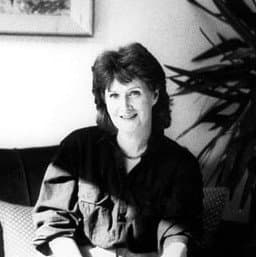
Sharon Olds was born in San Francisco in 1942 and grew up in a household she describes as difficult and repressive—experiences that would inspire some of the most brutally honest poetry in American literature. She studied at Stanford University and later at Columbia, where she earned her PhD. Olds has shared that she discovered poetry relatively late in life, after years of feeling silenced, and that sense of finally being able to express herself infuses nearly everything she writes.
Her debut collection, *Satan Says* (1980), established her as a powerful voice: raw, visceral, and unflinching. The book won the first Poetry Center Award at San Francisco State University, drawing attention from the literary community. Her next collection, *The Dead and the Living* (1984), earned the National Book Critics Circle Award and solidified her reputation as a poet willing to tackle subjects that many writers shy away from. The poems oscillate between public grief—elegies for historical violence victims—and deeply personal family experiences, with each aspect enhancing the other.
“What sets Olds apart is her determination not to beautify or soften her subjects.”
She writes about the body—desire, birth, aging, sex, illness—with a straightforwardness that some readers find shocking while others find liberating. Her domestic poems about her parents, her children, and her marriage maintain the same unyielding focus. When her marriage ended, she wrote about it candidly. The resulting collection, *Stag's Leap* (2012), won the Pulitzer Prize for Poetry in 2013, making her one of the few poets to have received both the Pulitzer and the National Book Critics Circle Award.
For decades, she has taught creative writing at New York University and served as the director of NYU's Creative Writing Program. She also led a poetry workshop at Goldwater Hospital in New York, working with patients facing severe physical disabilities—an endeavor that mirrors the belief driving her poetry: that every human experience deserves to be expressed in words.