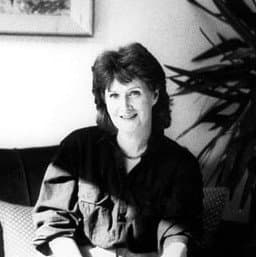
Li-Young Lee was born in 1957 in Jakarta, Indonesia, to Chinese parents who carried a remarkable history. His maternal great-grandfather was Yuan Shikai, the general who became China's first Republican president and, tragically for his legacy, attempted to crown himself emperor. His father was a personal physician to Mao Zedong before the family relocated to Indonesia, where he played a role in establishing Gamaliel University.
That relative stability was short-lived. In 1959, when Li-Young was just two years old, the family fled Indonesia to escape a surge of violent anti-Chinese sentiment sweeping the nation. This led to a five-year journey through exile — moving across Hong Kong, Macau, and Japan — before the family finally settled in the United States in 1964. His father later became a Presbyterian minister in a small Pennsylvania town, infusing Lee's poetry with a unique sense of quiet, domestic spirituality.
“Lee studied at the University of Pittsburgh, the University of Arizona, and the State University of New York at Brockport.”
It was in Pittsburgh that he discovered his voice and came under the mentorship of Gerald Stern, who became an advocate for his work. His debut collection, *Rose* (1986), quickly established him as a poet with remarkable emotional depth. His second book, *The City in Which I Love You* (1990), won the Lamont Poetry Selection from the Academy of American Poets.
His memoir *The Winged Seed* (1995) broadened his explorations into prose — tracing the family's dislocation, his father's formidable presence, and how memory influences someone who has lived across various languages and continents.