Skip to content

The Poet Index · Entry 1047

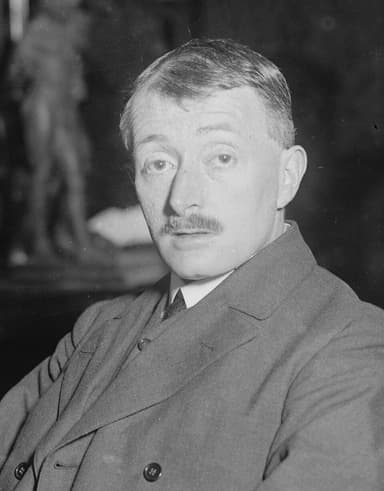
Andrew Barton Paterson
Poems

Lifespan
1864–1941
Nationality
Australia
Indexed Works
2

It’s Paterson in full gallop—a narrative poem that tells a compelling story, moves with unforgettable momentum, and delivers an ending that hits hard, even if you’ve never been on a horse.

Editorial intro

Nikola Gulevski, Editor, Storgy

About our editor →

Editorial intro

Andrew Barton Paterson wrote the song that became Australia's unofficial national anthem and centered it on a sheep thief who drowns himself rather than surrender to the police. This choice reveals much about his uniqueness: he found the heroic in the outlaw, the ordinary, and the overlooked, using a voice that felt less like literature and more like conversation across a campfire.

Paterson sits at the foundation of a distinctly Australian literary confidence — the belief that the bush, its workers, and its rough moral codes warranted serious artistic attention. He influenced generations of writers eager to depict place without apology. Readers encountering him for the first time typically notice two aspects: the rapid pace of his poems, driven by a ballad momentum that makes them nearly impossible to resist reading aloud, and the significant quiet darkness present within the celebration. "The Man from Snowy River" is a triumph, but Paterson never claimed the land was gentle. His world is demanding, sometimes fatal, and beautiful because of that. Start with the title poem, then proceed directly to "Waltzing Matilda," and you'll soon grasp why his face appears on the ten-dollar note.

Where to start

The Works

Sort byYearTitle
  1. 01Clancy of the OverflowUndated
  2. 02The Man from Snowy RiverUndated

Recurring themes

Biographical record

About Andrew Barton Paterson

Andrew Barton Paterson was born on 17 February 1864 on a station near Orange, New South Wales. He grew up in the bush country that shaped much of his writing. When he was a child, his family moved to Illalong Station near Yass, where he spent years among stockmen, drovers, and the rhythms of rural life, providing him with material he would use throughout his career.

Paterson trained as a solicitor in Sydney and worked in law for a while, but writing always called to him. In the 1880s, he started contributing verse to *The Bulletin* under the pen name "Banjo," which he took from a racehorse once owned by his family. The name stuck so well that most Australians today recognize him by it rather than as Andrew.

His 1895 collection *The Man from Snowy River and Other Verses* became an instant hit, selling out almost immediately and going through multiple printings—an impressive feat for a poetry collection in colonial Australia.

The title poem resonated with readers, capturing a vision of the bush as a place of skill, endurance, and a unique kind of quiet heroism.

In 1895, he also penned the lyrics to "Waltzing Matilda," working alongside Christina Macpherson, who provided the tune. The song became so ingrained in Australian culture that it’s often referred to as an unofficial national anthem, an ironic twist for a ballad about a sheep thief who drowns himself to escape arrest.

Biographical span
1864Birth
1941Death

Poets in the same orbit

Reader questions

Frequently asked