Skip to content
Storgy

The Poet Index · Entry 091

Nicholas Christopher
Poems

Lifespan
b. 1951
Nationality
United States
Indexed Works
0

Nicholas Christopher was born in New York City in 1951 and has built a quietly distinctive body of work in American poetry throughout his career.

Editorial intro

Storgy editorial

Editorial intro

Nicholas Christopher figured out how to smuggle film noir into lyric poetry without losing the music of either. His poems carry the atmosphere of a rain-slicked Manhattan street at 2 a.m., precise, shadowy, and alive with the sense that something just happened or is about to. They also hold myth, jazz, and memory in the same frame without any of it feeling forced. That combination is his alone. Among his generation of American poets, no one else was writing with one eye on a Greek myth and the other on a cinematographer's lighting cues while still making the whole thing feel urgent and personal.

He matters to the current landscape because the poets working in narrative and image-driven modes — the ones treating the poem as a scene rather than a statement — owe something to the space he carved out. His collections, particularly *Crossing the Equator* and *5° & Other Poems*, are the best entry points, and readers tend to be surprised by two things: how readable he is without being simple, and how New York City functions in his work less as a setting and more as a state of mind. The city does not decorate his poems; it thinks inside them.

Recurring themes

Biographical record

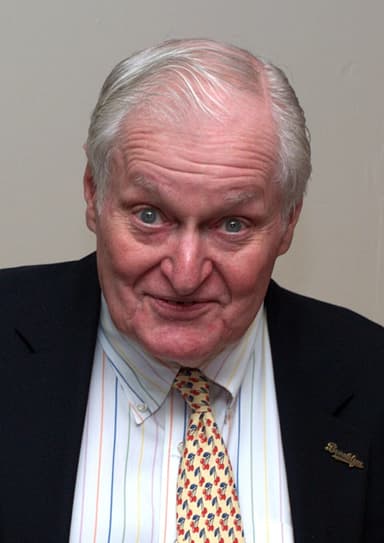
About Nicholas Christopher

Nicholas Christopher was born in New York City in 1951 and has built a quietly distinctive body of work in American poetry throughout his career. After studying at Harvard, the city of his birth has remained a constant presence in his writing — New York flows through his poems like an unseen river beneath the surface.

Christopher is a poet who effortlessly shifts between lyricism and storytelling, as well as the personal and the cinematic. His poems carry a noir essence — shadowy, atmospheric, and precise — setting him apart from both confessional poets and the abstract experimentalists of his generation. He draws inspiration from jazz, film, mythology, and the textures of urban life, crafting poems that feel both grounded and dreamlike.

He has published several poetry collections, including *On Tour with Rita* (1982), *A Short History of the Island of Butterflies* (1986), *Desperate Characters* (1988), *In the Year of the Comet* (1992), *5° & Other Poems* (1995), *Atomic Field: Two Poems* (2000), and *Crossing the Equator: New and Selected Poems* (2001). Each collection deepens his exploration of themes like the oddness hidden in everyday moments, how memory reshapes our experiences, and the mythological threads that run beneath contemporary life.

In addition to poetry, Christopher has authored novels such as *Veronica* (1996) and *A Trip to the Stars* (2000), which showcase his atmospheric, detail-rich style in longer fiction. He has also penned a critical study of film noir, *Somewhere in the Night* (1997), illustrating how profoundly cinema has influenced his creative vision.

For many years, he has taught at New York University, significantly impacting younger poets who work in narrative and image-driven styles. He has received fellowships from the Guggenheim Foundation and the National Endowment for the Arts, among other accolades.
Poets in the same orbit

Reader questions

Frequently asked

What is Nicholas Christopher's poetry like?

His poems create a vivid atmosphere and are rich with imagery, drawing readers in with compelling narratives. Imagine a blend of noir fiction and lyric poetry — sharp details, cityscapes, mythological hints, and an eerie feeling that something unusual lurks just beneath the everyday.

Is Nicholas Christopher mainly known as a poet or a novelist?

He began his career as a poet, and that’s still at the heart of how people see him. However, he has also penned several acclaimed novels and a book on film criticism. A common thread connects all his work—he is at his core a writer captivated by imagery, mood, and how the past lingers in the present.

What are his major influences?

Film noir is a significant influence—he even wrote a book on the subject. Jazz is another recurring element in his work. He also incorporates themes from Greek and Roman mythology, along with the rich tapestry of New York City life. While poets like Wallace Stevens and Hart Crane linger in the background, his voice remains uniquely his own.

Has he won any major awards?

He has received fellowships from the Guggenheim Foundation and the National Endowment for the Arts, placing him among distinguished peers. While he may not have garnered as much public acclaim as some of his contemporaries, his work has found a loyal audience that appreciates craft and atmosphere.

Where does he teach?

He has been part of the faculty at New York University for several years, teaching in the graduate creative writing program.

What is a good collection to start with?

*Crossing the Equator: New and Selected Poems* (2001) is a great starting point as it brings together a variety of his work from different stages of his career, showcasing his range. For a more concentrated collection, *5° & Other Poems* is an excellent option.

How does his fiction relate to his poetry?

The novels read like his poems stretched out into longer narratives — they share the same love for vivid, cinematic details, the same mythological depth, and the same brooding urban vibe. Readers who resonate with one usually find something to appreciate in the other.