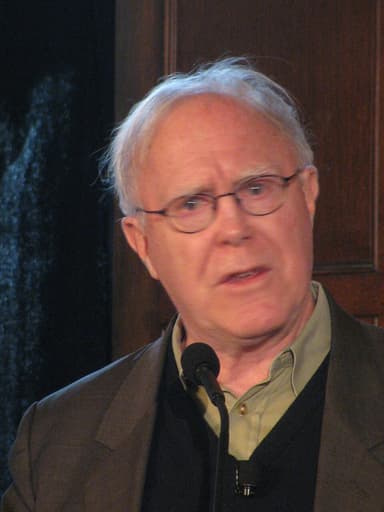
Tom Clark was an American poet born in Chicago in 1941, and he quietly influenced postwar American poetry. He studied at the University of Michigan and later at Cambridge, where he got a taste of the British poetry scene before returning to the U.S. and immersing himself in the New York School. He was the poetry editor of *The Paris Review* from 1963 to 1973, a role in which he helped define contemporary American poetry for a generation of readers. His editorial perspective was sharp and opinionated, leaving a lasting impact on the magazine long after he moved on.
Clark was remarkably prolific, publishing dozens of collections over five decades, along with biographies of poets like Jack Kerouac, Charles Olson, and Robert Creeley. These biographies were straightforward and sometimes contentious, sparking real debates in literary circles—a style Clark seemed to prefer.
“His poetry was influenced by the New York School’s appreciation for everyday moments, yet he never fully aligned with any single movement.”
There’s an apparent simplicity in his work that can be deceptive. He wrote about baseball, California light, friendship, loss, and the passage of time in a way that only someone who closely observes ordinary life can. After spending many years in the San Francisco Bay Area, teaching at New College of California, his writing became more open and willing to embrace silence.
Clark passed away in Oakland in 2018 after being hit by a car at the age of 77. The circumstances of his death felt cruelly at odds with the quiet, attentive nature of his life's work. He left behind a collection of poetry that invites readers to slow down and engage with it on its own unhurried terms.