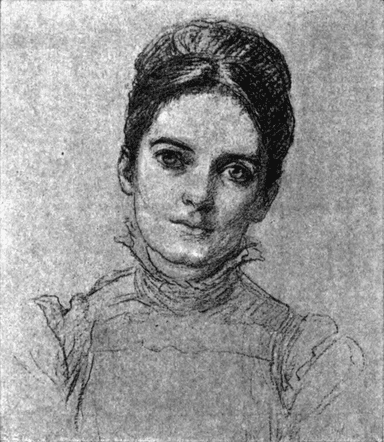
Amy Lowell was born in 1874 into one of New England's leading families — the same Lowells who established Boston's Lowell Institute and Harvard's Lowell lectures. Growing up at the family estate, Sevenels, in Brookline, Massachusetts, she had access to an extensive private library and read voraciously from a young age. Although her formal education was limited compared to her brothers', she found ways to learn that mattered more: she read widely, traveled, and observed the world around her closely.
She didn't release her first book of poetry until she was 38, which is considered a late start. That debut, *A Dome of Many-Coloured Glass* (1912), was conventional enough to attract little attention. A turning point came in 1913 when she traveled to London, met Ezra Pound, and connected with the imagist group. The imagists rejected Victorian ornamentation — aiming instead for clear images, precise language, and free verse that earned its freedom. Lowell embraced these ideas seriously but also forged her own path.
“She emerged as one of the most prominent advocates for imagism in America, editing three anthologies titled "Some Imagist Poets" between 1915 and 1917.”
Pound, who had moved on to his own work, referred to her interpretation of the movement as "Amygism" — a slight, yet one that recognized her genuine influence. Lowell didn't seem to take offense.
A large woman who smoked cigars, Lowell delivered electrifying public readings and openly expressed her strong opinions. For the last decade of her life, she lived with actress Ada Dwyer Russell, who inspired some of her most personal poems. She wrote in a style she called "polyphonic prose" — a blend of prose and poetry that utilized rhythm, alliteration, and imagery without adhering to a strict line structure.