Skip to content

The Poet Index · Entry 1044

Allen Ginsberg
Poems

Lifespan
1926–1997
Nationality
United States
Indexed Works
4

At just over a page long, it captures Ginsberg's humor, tenderness, and influence from Whitman in a single, powerful dose — an ideal first introduction to his work.

Editorial intro

Nikola Gulevski, Editor, Storgy

About our editor →

Editorial intro

Allen Ginsberg stood up at the Six Gallery in San Francisco in 1955 and read "Howl" aloud — breaking open American poetry that had been sealed shut since postwar culture decided conformity was survival. The poem was long, furious, and tender, built on Whitman-style lines charged with jazz rhythm and street-level urgency. It named the destruction of a generation and pointed at who was responsible. The obscenity trial that followed its City Lights publication amplified Ginsberg rather than silencing him. No other poet of his era turned a court case into a cultural mandate quite like that.

He sits at the center of the Beat Generation, alongside Kerouac and Burroughs, but his influence extends beyond that label. Bob Dylan absorbed him. Punk borrowed his refusal. His open homosexuality, taken at serious personal risk, reshaped what confessional poetry could express about the body and desire. Readers encountering Ginsberg for the first time are often surprised by two things: how genuinely tender he is beneath the outrage, and how formally deliberate the poems are — those sprawling lines are not accidents. Trace almost any American poet writing with political heat or documentary ambition since 1960, and Ginsberg is somewhere upstream.

Where to start

The Works

Sort byYearTitle
  1. 01A Supermarket in CaliforniaUndated
  2. 02HowlUndated
  3. 03Sunflower SutraUndated
  4. 04Symphonie FantastiqueUndated

Recurring themes

Biographical record

About Allen Ginsberg

Allen Ginsberg was born in Newark, New Jersey, in 1926, to Louis Ginsberg, a poet and schoolteacher, and Naomi Ginsberg, whose battles with mental illness would follow Allen throughout his writing career. He grew up in Paterson, New Jersey, and arrived at Columbia University in the early 1940s, eager for something that American culture wasn’t yet providing.

At Columbia, he connected with a group of writers who would transform literature: Lucien Carr, William S. Burroughs, and Jack Kerouac. These relationships went beyond casual friendship—they fueled what became known as the Beat Generation, a loose literary movement that rejected postwar conformity, celebrated spontaneity, and focused on the lives of those whom mainstream America often overlooked. Ginsberg absorbed all of this and pushed it even further.

His breakthrough came in 1955 when he read "Howl" aloud at the Six Gallery in San Francisco.

The poem—long, incantatory, furious, tender—captured the destruction of the best minds of his generation and identified the forces responsible. The reading quickly became legendary, and the ensuing obscenity trial over the poem's publication by City Lights Books only broadened its impact, solidifying Ginsberg’s reputation as a poet unafraid to express what others wouldn’t.

In the following decades, Ginsberg became one of the most prominent writers in America. He protested the Vietnam War, chanted at political rallies, traveled to India where he deeply engaged with Buddhism and Hindu devotional practices, and mingled with figures like Bob Dylan and Ezra Pound. He was openly gay at a time when that involved significant personal and professional risks, and he wrote about desire, the body, and love unapologetically.
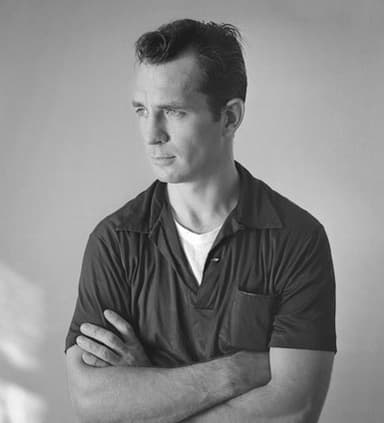
Biographical span
1926Birth
1997Death

Poets in the same orbit

Reader questions

Frequently asked