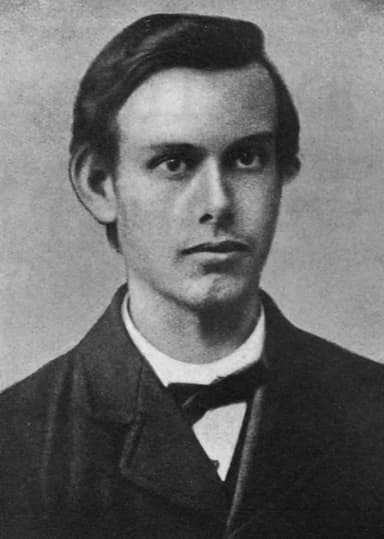
Gerard Manley Hopkins was born in Stratford, Essex in 1844, the eldest of nine children in a prosperous family with a strong artistic background. He displayed early talents in both poetry and visual art, winning a poetry prize at school and pursuing Classics at Balliol College, Oxford. It was there that he came under the influence of Walter Pater and Benjamin Jowett, but it was John Henry Newman’s writings that had the most profound impact on him. In 1866, Hopkins converted to Roman Catholicism and a year later joined the Society of Jesus, the Jesuits. Upon entering the novitiate, he burned nearly all the poetry he had written up to that point, believing it conflicted with his religious calling.
For the next twenty years, he moved between Jesuit houses across England, Wales, and Ireland, where he studied, taught, and served as a parish priest. His time in Wales was particularly productive: he learned Welsh, developed a deep appreciation for its landscape, and began to formulate ideas about rhythm and sound that would come to define his later work. He referred to his new metrical system as "sprung rhythm," which focused on counting stresses rather than syllables, giving his lines a dynamic, energetic quality that was unique in Victorian poetry.
“Hopkins wrote in relative obscurity, sharing his work almost solely with his friend and fellow poet Robert Bridges, who served as a sort of one-man archive for his poetry.”
He never pursued publication during his lifetime, and the two men exchanged a lengthy correspondence, where Bridges often expressed confusion over Hopkins's experimental style, while Hopkins passionately defended his choices.
In 1884, Hopkins was appointed Professor of Greek and Latin at University College Dublin. He found this position isolating and exhausting. Ireland was politically unstable, his health was declining, and he grappled with what he termed "desolation," a spiritual dryness that influenced the bleak, introspective sonnets now known as the "Terrible Sonnets." He died of typhoid fever in Dublin in 1889 at the age of 44, reportedly saying at the end, "I am so happy, I am so happy."