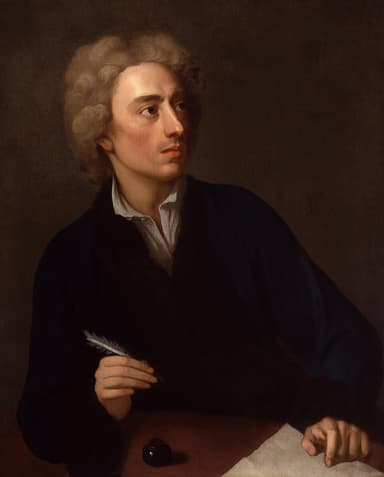
Jonathan Swift was born in Dublin in 1667, just months after his father's death, a beginning that foreshadowed a life marked by instability, displacement, and a keen awareness of human folly. Raised in part by relatives, he attended Kilkenny College and Trinity College Dublin, spending much of his early adulthood moving between Ireland and England, never fully at home in either. He was ordained as an Anglican priest in 1694 and later became the Dean of St Patrick's Cathedral in Dublin in 1713, a position he held until his death. Yet, he always felt it was a sort of exile from the London literary scene he longed to be part of.
In London, Swift was at the heart of cultural life. He moved among notable figures like Alexander Pope, John Gay, and John Arbuthnot, and together they established the Scriblerus Club, an informal group of writers dedicated to satirizing pretentiousness and poor taste. Swift was also a powerful political pamphleteer, writing in support of the Tory ministry during Queen Anne’s reign, and his words were feared by politicians across the spectrum.
“However, it is his satirical works that have endured.”
*Gulliver's Travels* (1726) appears to be a children's adventure tale at first glance—a man's journey to tiny people, then giants, a flying island, and a land ruled by rational horses. But beneath the surface, it presents a relentless and often brutal critique of human arrogance, political corruption, and the self-delusion of so-called civilized society. The book was an instant hit and has remained in print ever since.
Swift also penned *A Tale of a Tub*, a chaotic yet brilliant satire on religious extremism and literary vanity, as well as *A Modest Proposal* (1729), which coldly suggested that the Irish poor might address their issues by selling their babies as food to the wealthy English. This piece stands as one of the sharpest examples of irony in the English language.