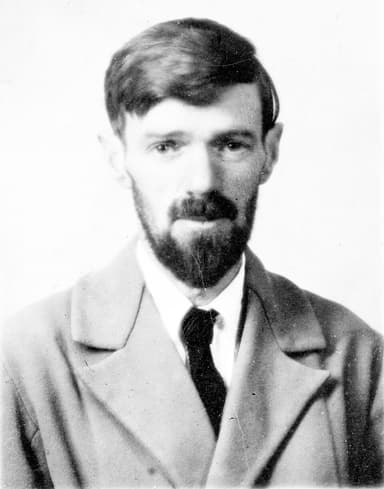
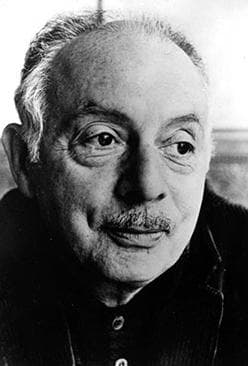
Thom Gunn was born Thomson William Gunn in 1929 in Gravesend, England. He grew up in a household infused with literary ambition—his mother was a journalist, and books played a significant role in his upbringing. However, this environment didn’t shield him from loss: his mother died by suicide when he was fifteen, a wound that subtly runs through much of his later work, exploring themes of mortality and human fragility.
He studied at Cambridge, where his first collection, *Fighting Terms* (1954), established him as a poet of notable strength. The poems were tight, formally crafted, and populated with leather-jacketed toughs and motorcycle riders—figures embodying will and physicality. He quickly found himself associated with Philip Larkin and others, grouped under the label "The Movement," a loose coalition of British poets who challenged the romantic excesses of the Dylan Thomas era in favor of clarity and irony.
“But Gunn wasn’t content to stay in one place.”
In 1954, he followed his partner Mike Kitay to California, eventually settling in San Francisco, and that move transformed everything. He took a teaching position at UC Berkeley and spent decades immersed in the Bay Area's counterculture—the Haight-Ashbury scene, the gay community, and the drug experiments of the 1960s and 70s. He wrote about LSD with the same meticulous care he had once devoted to existentialist philosophy.
His style evolved as well. The strict metres and syllabics of his early work gradually transitioned into free verse, though he never completely abandoned formal structures. He could craft a perfectly executed sonnet and a sprawling open-form meditation within the same collection, making both feel essential.