Skip to content

The Poet Index · Entry 074

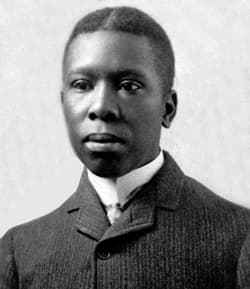
Paul Laurence Dunbar
Poems

Lifespan
1872–1906
Nationality
United States
Indexed Works
2

Paul Laurence Dunbar was born in Dayton, Ohio, in 1872 to Joshua and Matilda Dunbar, who were both enslaved in Kentucky before the Civil War.

Editorial intro

Nikola Gulevski, Editor, Storgy

About our editor →

Editorial intro

Paul Laurence Dunbar was the first Black American poet to earn a national audience entirely on the strength of his writing, not as a curiosity or a cause, but as a craftsman whose work sold, traveled, and resonated. Operating an elevator in Dayton while building one of the most distinctive voices in American letters, he published *Lyrics of Lowly Life* in 1896 and gained fame almost before he had the chance to determine what that would mean for him. The tension between audience expectations and his authentic expression fueled his best work.

Dunbar is foundational to a lineage that connects directly to Langston Hughes and Maya Angelou, both of whom acknowledged his pioneering influence. Many readers today are surprised by the range of his work: the dialect poems are warm and musical, while the standard-English poems are where he truly made his mark. "We Wear the Mask," written in 1896, powerfully describes the performance of happiness over hidden pain, resonating as if it were written recently. Another striking aspect is his age—he died at thirty-three, having already produced a substantial body of work across poetry, fiction, and Broadway. Reading Dunbar now highlights the magnitude of that loss.

The Works

Sort byYearTitle
  1. 01We Wear the Mask1896
  2. 02Sympathy1899

Recurring themes

Biographical record

About Paul Laurence Dunbar

Paul Laurence Dunbar was born in Dayton, Ohio, in 1872 to Joshua and Matilda Dunbar, who were both enslaved in Kentucky before the Civil War. The legacy of their struggles—bondage, survival, and the hard-fought journey to freedom—shapes much of his writing.

Dunbar showed his talent for writing early on. By the age of sixteen, he was publishing poems in a local newspaper, and despite being the only Black student in his high school class, his peers elected him president of the literary society. One of those peers was Orville Wright, who later helped Dunbar self-publish his first collection using the Wright brothers' printing press.

After graduating, Dunbar struggled to find suitable work, settling for a job operating an elevator in a Dayton office building.

Nevertheless, he continued to write. In 1893, he showcased his work at the World's Columbian Exposition in Chicago, where he caught the attention of Frederick Douglass. This connection helped him gain recognition. His 1896 collection, *Lyrics of Lowly Life*, which included a preface by noted critic William Dean Howells, catapulted him to national fame almost overnight.

However, this fame came with challenges. Howells praised Dunbar's dialect poems—written in the vernacular of Black rural life in the South—and the white reading audience gravitated towards those works above all else. Dunbar felt constrained by this reception. He also wrote serious poetry in standard English, creating pieces filled with lyric beauty and deep emotion about race, identity, and the pressures of conforming to societal expectations. His poem "We Wear the Mask" captures this tension and has only become more relevant over the years.
Biographical span
1872Birth
1906Death
1898Median work

Poets in the same orbit

Reader questions

Frequently asked