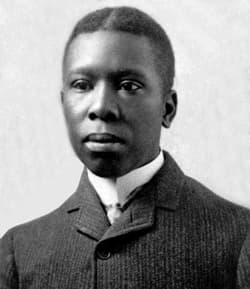
Paul Laurence Dunbar was born on June 27, 1872, in Dayton, Ohio, to Matilda and Joshua Dunbar, both formerly enslaved in Kentucky before the Civil War. This background profoundly influenced Dunbar's understanding of language, identity, and the struggles of survival in America.
He displayed a knack for writing early on. At Central High School in Dayton, he edited the school newspaper and served as class president, being the only Black student in his class. Though he aspired to attend college, financial constraints led him to take a job operating an elevator for four dollars a week. Nevertheless, he continued to write, and in 1892, he self-published his first collection, *Oak and Ivy*, selling copies to elevator passengers to fund the printing.
“His big break came in 1896 when the prominent literary critic William Dean Howells reviewed Dunbar's collection *Majors and Minors* in Harper's Weekly.”
Howells praised the dialect poems—written in a stylized version of Black Southern speech—and this acclaim propelled Dunbar's national career. However, it also confined him. Publishers and white audiences sought more dialect work that fit the plantation-nostalgia narrative of the time. Although Dunbar also wrote formal poems in "standard English" about grief, ambition, and the masks people wear, these received less recognition.
This tension defines his career. Dunbar felt that the dialect poems were a kind of performance he had to put on, a mask he wore to have his voice heard. His most famous poem, "We Wear the Mask," encapsulates this sentiment—while it doesn't explicitly mention race, it resonates universally, addressing anyone familiar with the context.