Skip to content

The Poet Index · Entry 070

Laurence Dunbar
Poems

Lifespan
1872–1906
Nationality
United States
Indexed Works
0

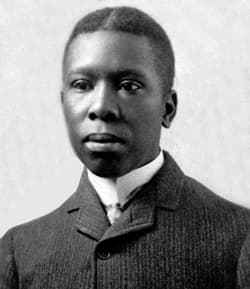
Paul Laurence Dunbar was born on June 27, 1872, in Dayton, Ohio, to Matilda and Joshua Dunbar, both of whom were formerly enslaved people from Kentucky.

Editorial intro

Nikola Gulevski, Editor, Storgy

About our editor →

Editorial intro

Paul Laurence Dunbar was the first African American poet to build a genuinely national audience in the United States, and he did it partly by selling his own poems to elevator passengers in Dayton, Ohio, because no other door was open to him. That hustle led to a breakthrough: a glowing 1895 review in Harper's Weekly from the era's most powerful literary critic, but this breakthrough came with a trap. The public fell in love with his dialect poems, written in Black Southern vernacular, and largely ignored the formal English verse he considered just as serious. He called this out directly in his poem "The Poet," which is a quiet indictment of being celebrated for the wrong reasons.

Dunbar sits at the root of a tradition that runs straight through the Harlem Renaissance. Langston Hughes, James Weldon Johnson, and Alice Dunbar-Nelson all pointed back to him. What surprises first-time readers is the range: the dialect poems are warm and musical, but the standard-English poems carry a controlled anger that feels startlingly modern. Another surprise is how clearly his career anticipated arguments that Black writers are still having today — about authenticity, who gets to define a writer's "real" voice, and what an audience's enthusiasm can cost the person receiving it.

Recurring themes

Biographical record

About Laurence Dunbar

Paul Laurence Dunbar was born on June 27, 1872, in Dayton, Ohio, to Matilda and Joshua Dunbar, both of whom were formerly enslaved people from Kentucky. His father escaped slavery and served in the 55th Massachusetts Infantry during the Civil War, an experience that shaped the environment in which Dunbar grew up — one where history was very much a lived reality.

Dunbar exhibited a talent for language at an early age. As the only Black student at Dayton's Central High School, he edited the school newspaper, led the literary society, and was elected class poet. Among his classmates were Orville and Wilbur Wright, who would later help him print his first collection of poems on their printing press.

He published that initial collection, *Oak and Ivy*, in 1893, selling copies to elevator passengers while working as an elevator operator, as he struggled to find employment that matched his education.

His determination paid off. *Majors and Minors* followed in 1895, and when the influential critic William Dean Howells reviewed it in *Harper's Weekly*, Dunbar's national reputation skyrocketed almost overnight.

However, this acclaim came with a caveat. Howells highlighted Dunbar's dialect poems, written in the vernacular of Black Southern speech, as his most genuine work, and the public agreed. Publishers began to seek more dialect pieces. Dunbar, however, regarded his poems in standard English as equally serious and finely crafted, leading to his growing frustration as that work was overlooked. He expressed this conflict directly in "The Poet," a poem that serves as a subtle critique of being celebrated for the wrong reasons.
Biographical span
1872Birth
1906Death

Poets in the same orbit

Reader questions

Frequently asked