Skip to content

The Poet Index · Entry 1049

Anna Laetitia Barbauld
Poems

Lifespan
1743–1825
Nationality
France
Indexed Works
1

It's brief, intellectually incisive, and highlights what sets Barbauld apart—she takes a well-known rationalist concept and subtly undermines it with one emotional counter-argument.

Editorial intro

Nikola Gulevski, Editor, Storgy

About our editor →

Editorial intro

Anna Laetitia Barbauld wrote a poem in 1812 that predicted Britain's imperial decline and America's cultural rise, and the critical establishment punished her so thoroughly for it that she barely published again. That poem, *Eighteen Hundred and Eleven*, is one of the clearest political visions in Romantic-era literature, and the backlash it received reveals much about why Barbauld disappeared from the canon for over a century and why her resurgence is important.

She occupies a central position in a world that textbooks treat as the margins: dissenting religion, women's intellectual life, children's education, anti-slavery activism, and literary criticism all flowed through her work without any apparent strain. She influenced how Romantic poets perceived public conscience, and her editorial prefaces to a fifty-volume anthology of British novelists provide some of the sharpest criticism of that era. First-time readers are often surprised by two aspects: how humorous and direct her prose can be, and how politically vulnerable she was willing to make herself at a time when women writers were expected to soften every edge. Read *Eighteen Hundred and Eleven* first, then follow it with *Hymns in Prose for Children*, and you will see the full range of a writer who refused to conform.

Where to start

The Works

Sort byYearTitle
  1. 01Amo Ergo SumUndated

Recurring themes

Biographical record

About Anna Laetitia Barbauld

Anna Laetitia Barbauld (1743–1825) was one of Britain's most versatile and intellectually vibrant writers of her time. Born Anna Laetitia Aikin in Kibworth Harcourt, Leicestershire, she grew up in a household that valued education—her father, John Aikin, was a dissenting minister and teacher who provided her with the same rigorous classical and literary training he offered his male students. This early foundation in Latin, Greek, French, and Italian would influence everything she later wrote.

In 1774, she married Rochemont Barbauld, a dissenting minister of French descent, and together they ran a school in Palgrave, Suffolk, for over a decade. Teaching children inspired her to write for them as well, resulting in her widely read works *Lessons for Children* and *Hymns in Prose for Children*, which became genuinely influential texts in the realm of children's literature rather than mere footnotes.

Yet Barbauld was never limited to one genre.

She seamlessly transitioned between poetry, literary criticism, political pamphlets, and editorial work. A key figure in the Blue Stockings Society, an informal network of intellectual women surrounding figures like Elizabeth Montagu, she helped elevate serious literary conversation as a respectable endeavor for women in Georgian England. She also edited a fifty-volume anthology of British novelists, contributing critical prefaces that remain sharp and insightful.

Her political views were bold for her time. She opposed the slave trade, advocated for the repeal of the Test Acts that limited the rights of religious dissenters, and wrote *Sins of Government, Sins of the Nation* (1793) in opposition to the war with France. Her long prophetic poem *Eighteen Hundred and Eleven* (1812), which foresaw Britain's decline and America's rise, faced harsh criticism—one reviewer famously suggested she return to her knitting—and she published little thereafter.
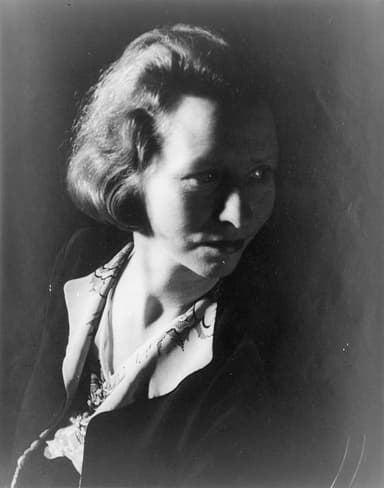
Biographical span
1743Birth
1825Death

Poets in the same orbit

Reader questions

Frequently asked