Ben Jonson was born in 1572 in London, just a month after his father passed away, and grew up in tough circumstances that could have easily consumed him. His stepfather worked as a bricklayer, and for a time, Jonson did that job himself—a fact he never let people forget, and which his rivals constantly reminded him of. He studied at Westminster School under the scholar William Camden, who provided him with a rigorous classical education that influenced everything he wrote. Although he never attended university, his eventual mastery of Latin and Greek impressed his contemporaries.
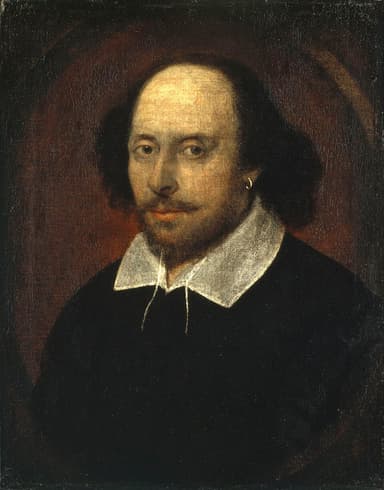
Before rising to fame in the London literary scene, Jonson served as a soldier in the Low Countries, where he reportedly killed an enemy soldier in a one-on-one duel. Upon returning to England, he found his way into theatre as an actor and later as a playwright. His early career was tumultuous: he killed fellow actor Gabriel Spencer in a duel in 1598, narrowly avoided execution by pleading benefit of clergy, and had his thumb branded as punishment. That same year, his play Every Man in His Humour was staged with William Shakespeare in the cast—a detail that highlights the tightly knit nature of the Elizabethan theatre community.
“Jonson's plays earned him fame, but it was his poetry that kept his name alive for centuries.”
He wrote with a precision and economy that distinguished him from the more elaborate styles popular at the time. His epigrams are sharp and often humorous, while his odes and songs possess a classical restraint, giving them a carved quality rather than a composed one. He became the center of a literary circle known as the "Sons of Ben," comprising younger poets like Robert Herrick and Thomas Carew who looked to his classicism as a model.
King James I essentially made him the first official Poet Laureate by granting him a pension in 1616, the same year Jonson published his collected works—a bold declaration that his writing was serious literature, not merely entertainment. He spent years crafting court masques for the Jacobean court, collaborating and clashing dramatically with architect Inigo Jones.