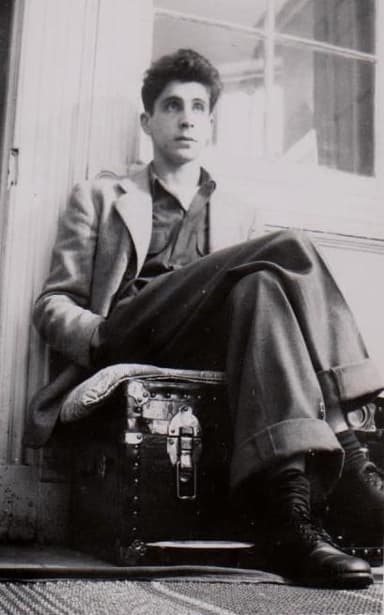
Wilfred Owen was born in Oswestry, Shropshire, in 1893 as the eldest of four children. His early life was influenced by a devout Evangelical mother whose faith had a lasting impact on him, along with a deep ambition to become a poet. As a teenager, he was an obsessive reader of Keats and spent time in France before the war, teaching English in Bordeaux — where he happened to be when the conflict began.
In 1915, he enlisted in the Artists' Rifles and was later commissioned into the Manchester Regiment. By early 1917, Owen found himself in the trenches on the Western Front, an experience that left him deeply traumatized. He endured the Battle of the Somme, spent days trapped in a shell-hole next to the scattered remains of a fellow officer, and eventually was sent to Craiglockhart War Hospital in Edinburgh, where he was diagnosed with shell shock.
“Craiglockhart turned out to be a turning point in his life.”
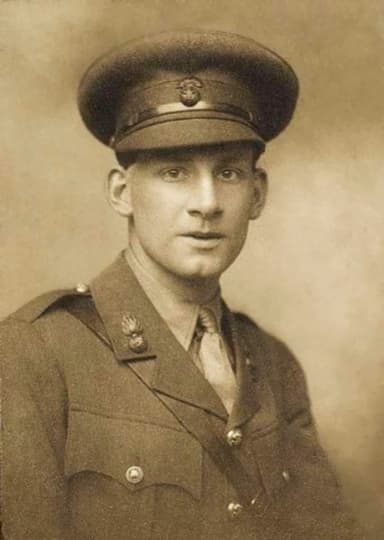
There, he met Siegfried Sassoon, a well-known anti-war poet who read Owen's drafts and pushed him hard — encouraging him toward vivid imagery, anger, and away from the softer Romanticism he had been raised on. The mentorship was transformative. In just a few months, Owen produced nearly all the poems for which he is now remembered, including "Dulce et Decorum Est" and "Strange Meeting."
He was discharged and returned to the front in 1918, motivated partly by a sense of duty and partly by the belief that someone needed to bear witness — that the men in the trenches deserved a storyteller. He received the Military Cross for his bravery during an assault near the village of Joncourt in October 1918.