Skip to content

The Poet Index · Entry 1018

Laurence Binyon
Poems

Lifespan
1869–1943
Nationality
United Kingdom
Indexed Works
1

It's the only place to begin — this poem encapsulates Binyon's entire legacy, and experiencing it in full shows just how much more thoughtful and mournful it is compared to the single stanza that most people are familia…

Editorial intro

Nikola Gulevski, Editor, Storgy

About our editor →

Editorial intro

Laurence Binyon wrote four lines in September 1914 that became a ritual, recited every Remembrance Day across the Commonwealth, carved into war memorials from Australia to Canada, and memorized by people who have never read another word of his work. "They shall grow not old, as we that are left grow old" is one of those rare pieces of language that stops being a poem and starts being a ceremony.

What surprises most readers is the gap between that reputation and the man behind it. Binyon spent forty years at the British Museum and became one of the foremost Western authorities on Japanese and Chinese painting, a scholarly achievement almost entirely forgotten today. He was not a war poet in the conventional sense; he was in his mid-forties when the conflict began, too old to fight, and wrote "For the Fallen" just weeks into the war, before the full weight of the slaughter was known. His broader body of work — plays, translations, art criticism, lyric poetry — sits largely unread. What the modern reader finds, coming to Binyon fresh, is a quietly serious writer swallowed whole by a single stanza, and a reminder of how completely one piece of writing can define a life.

Where to start

The Works

Sort byYearTitle
  1. 01For the FallenUndated

Recurring themes

Biographical record

About Laurence Binyon

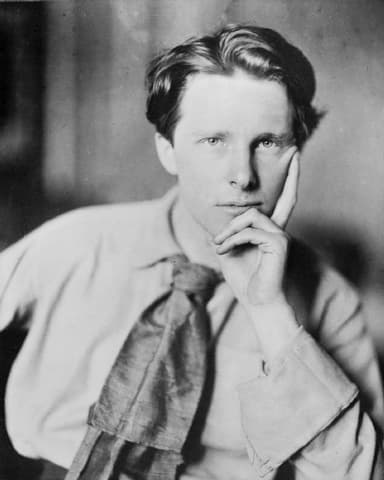
Laurence Binyon was born in Lancaster in 1869 to a Church of England clergyman. He displayed early talent as a writer, winning the esteemed Newdigate Prize for poetry at Oxford's Trinity College in 1891—an award previously claimed by notable figures like John Ruskin and Oscar Wilde. However, that recognition was merely a footnote in a long and quietly impressive career.

After graduating from Oxford, Binyon joined the British Museum in 1893 and remained there for forty years, eventually becoming a prominent authority on Asian art in the English-speaking world. His scholarly contributions to Japanese and Chinese painting were truly groundbreaking, helping to shape Western perceptions and appreciation of East Asian visual culture. His career unfolded alongside his poetry; he was always both a diligent scholar and an active poet.

In 1904, he married Cicely Margaret Powell, a historian, and the couple had three daughters.

One of them, Nicolete Gray, became a renowned artist and lettering historian, reflecting the creative environment Binyon fostered at home.

When the First World War began, Binyon was in his mid-forties—too old to enlist—but the war deeply affected him. He volunteered as a medical orderly on the Western Front, witnessing the horrific scale of the conflict firsthand. From this experience, he penned "For the Fallen" in September 1914, just weeks after the war started. The poem's fourth stanza—"They shall grow not old, as we that are left grow old"—has become one of the most quoted lines in English. It is recited at Remembrance Day ceremonies throughout the Commonwealth each year, a tradition that has endured for over a century.
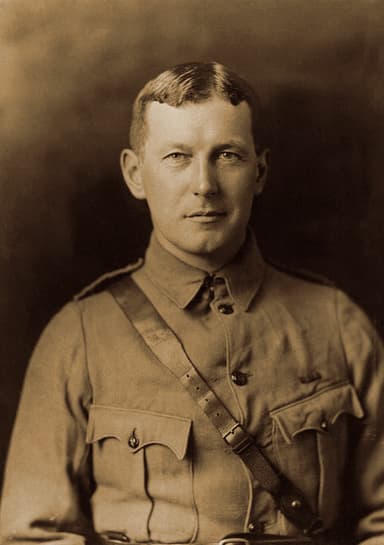
Biographical span
1869Birth
1943Death

Poets in the same orbit

Reader questions

Frequently asked