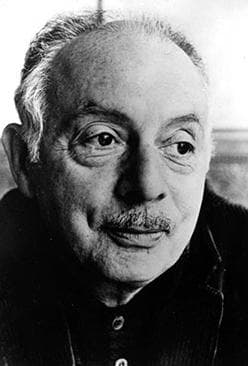
Alfred Edward Housman was born in Fockbury, Worcestershire, in 1859 as the eldest of seven children. He was an exceptional student—someone who made Latin and Greek seem effortless—and arrived at Oxford with high hopes for a distinguished academic career. However, in 1881, he failed his final examinations in literae humaniores. The reasons for this setback have been the subject of much discussion: some attribute it to the emotional turmoil surrounding his unrequited love for fellow student Moses Jackson, a feeling Housman kept largely to himself for the rest of his life. Regardless of the reason, the failure was genuine, and its effects were immediate.
For the next ten years, he worked as a clerk at the Patent Office in London. While this may seem like a defeat, it turned out to be something quite unexpected. In his free time, he taught himself to become one of the most rigorous textual critics in the English-speaking world, publishing detailed scholarly papers on Latin poets—Ovid, Propertius, and Horace—entirely independent of any university affiliation. His work was so impressive that in 1892, University College London appointed him Professor of Latin despite his lack of a completed degree. In 1911, he transferred to Cambridge as Kennedy Professor of Latin, a position he held until his death in 1936.
“His academic reputation was built on editions of Roman poets Manilius, Juvenal, and Lucan, which are still considered authoritative today.”
Known for being brutally honest in his critiques, his prefaces to these editions contain some of the most scathing criticisms of rival scholars ever written in academic prose.
Housman's poetry exists in a different realm from his scholarship, though it shares the same economy and precision. *A Shropshire Lad*, published at his own expense in 1896, initially sold slowly but found a large audience during World War I, when its themes of young men dying prematurely and the unattainable beauty of a countryside felt particularly pressing. A second collection, *Last Poems*, was released in 1922, followed by *More Poems*, which came out posthumously.