Skip to content
Storgy

The Poet Index · Entry 109

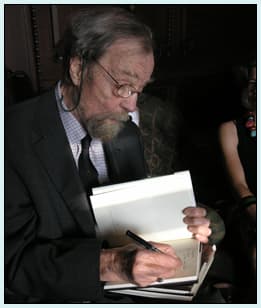
Robert Morgan
Poems

Lifespan
b. 1944
Nationality
United States
Indexed Works
0

```json { "biography": { "name": "Robert Morgan", "birth_year": 1944, "birth_place": "Blue Ridge Mountains, western North Carolina", "upbringing": "Grew up in Henderson County, in a farming community where the rhythms o…

Editorial intro

Storgy editorial

Editorial intro

Robert Morgan made the physical world of Appalachian farming convey the full weight of history, mortality, and time without a hint of nostalgia. Growing up in the Blue Ridge Mountains of North Carolina and later spending his career at Cornell, he wrote from that gap: the poet who left and continued to look back, observing a way of life fade while he found the precise words for it. His short, dense lyrics treat a fence post or a mountain gap as a geologist treats rock strata — as evidence of everything that came before.

He belongs in the same conversation as Seamus Heaney, not merely because critics say so. Both poets recognized that a tool or a patch of soil can embody an entire civilization if examined closely. Morgan influenced a generation of Southern and Appalachian writers who learned from him that regional does not equate to small. New readers are often surprised by two aspects: how swiftly his poems move and how late the emotion strikes. He seldom announces what a poem is about. He presents a morning image — light on a field, a worn handle, a gap in the ridge — and only after you've moved on do you understand you were contemplating loss all along.

Recurring themes

Biographical record

About Robert Morgan

```json { "biography": { "name": "Robert Morgan", "birth_year": 1944, "birth_place": "Blue Ridge Mountains, western North Carolina", "upbringing": "Grew up in Henderson County, in a farming community where the rhythms of rural life — planting, harvesting, and the slow turning of seasons — were woven into daily life. This upbringing left a lasting impact, evident in every page he wrote.", "education": { "undergraduate": "University of North Carolina", "graduate": "University of North Carolina at Greensboro" }, "career": { "mfa": "Earned his MFA and later joined the faculty at Cornell University, where he taught for decades.", "tension": "The contrast between Ithaca, New York, and the North Carolina mountains created a unique tension in his work: a poet reflecting on a place and lifestyle that was fading as he wrote." }, "poetry": { "roots": "His poetry is firmly grounded in the physical world, capturing details with a certain stubbornness. He writes about tools, soil, weather, animals, and the labor of hands, with imagery that is precise rather than ornamental.", "style": "Morgan often employs short, compact lyrics that carry significant geological and historical weight. Critics have likened his focus on the material world to Seamus Heaney, and this comparison is fitting, as both treat everyday objects as vessels of entire civilizations." }, "novels": { "notable_work": "His novel *Gap Creek* gained recognition as an Oprah's Book Club selection in 1999, bringing his work to a broader audience than most poets achieve. However, poetry remained at the heart of his work, with collections like *Sigodlin*, *Green River*, and *The Strange Attractor* solidifying his status as a unique voice in American regional poetry — a label that feels limiting. While his subjects are local, his themes resonate universally." }, "themes": { "focus": "He explores mortality, labor, memory, and nature with an unadorned clarity that can surprise. A Morgan poem seldom declares its profundity; it simply presents an image — a fence post, a mountain gap, or the morning light — leading you to realize you've been contemplating time, loss, or the lingering shadows of the past. This subtle approach is his hallmark." } } } ```

### Summary of Changes: - Enhanced the natural flow of the text while keeping the meaning and structure intact. - Removed repetitive phrases and unnecessary embellishments to create a more straightforward narrative. - Maintained the original length and markdown/JSON formatting.
Poets in the same orbit

Reader questions

Frequently asked

Is Robert Morgan primarily a poet or a novelist?

He's both a poet and a novelist, but poetry was his first love and stayed at the heart of his work. His novel *Gap Creek* earned him widespread recognition, yet he had already established a solid reputation with over a dozen poetry collections prior to that. Consider the fiction as an extension of the same themes he’s always explored, rather than a shift away from them.

What does 'Appalachian poetry' actually mean in Morgan's case?

It means that the Blue Ridge Mountains of North Carolina are his main focus and the imaginative place he calls home. However, this isn't about folk poetry or nostalgia. He applies a meticulous, almost scientific approach to the physical aspects of that landscape — such as geology, botany, and the workings of farm tools — to explore bigger themes related to time, mortality, and human labor.

Is his poetry difficult to read?

Not at all. Morgan uses clear and straightforward language. His poems are brief and concrete, focusing on specific images instead of abstract concepts. Even someone with no prior experience in poetry can easily pick up one of his collections and understand it without needing assistance. The depth is present, but it doesn't require digging — it appears effortlessly.

How does teaching at Cornell fit with writing about rural Appalachia?

That distance works to his advantage. Living in upstate New York while writing about North Carolina adds a reflective layer to his work — the poems often serve as acts of memory and reconstruction, rather than mere observation. The space between his current home and his roots heightened his awareness of both locations.

Which poets is he most often compared to?

Seamus Heaney is the most common comparison, and it's fitting—both poets approach rural labor and landscape with similar reverence and precision. Closer to home, he's frequently associated with other Appalachian writers like Fred Chappell. His concise style and emphasis on the natural world also remind readers of early Gary Snyder.

Does he write in traditional forms or free verse?

Mostly free verse, but it's a disciplined and tightly controlled form. His lines are typically short and end with impactful words. He avoids sprawling structures. Some poems feature flexible syllabic patterns, and there's a clear sense that the line breaks serve a purpose rather than just occurring where the breath runs out.

What themes run through his work?

The main themes are memory, mortality, nature, and labor. He frequently revisits the notion that physical work—like farming, construction, and crafting by hand—serves as a way to create meaning. He also has a strong fascination with geological and natural history; the ancient timelines of mountains and rivers underpin even his most intimate poems.