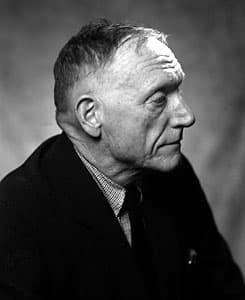
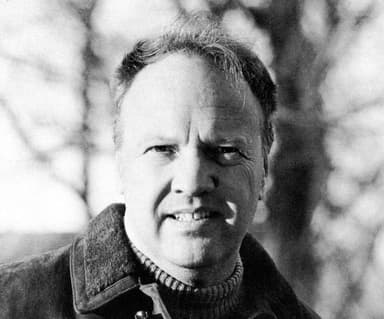
William Stafford was born on January 17, 1914, in Hutchinson, Kansas, and spent his childhood moving through the small towns of the Great Plains during the tough times of the Depression. This upbringing—characterized by flat landscapes, close-knit communities, and the rhythms of rural life—had a lasting impact on his writing. He studied at the University of Kansas and later earned his PhD from the University of Iowa, where he participated in the Iowa Writers' Workshop.
During World War II, Stafford was a conscientious objector, a stance he openly embraced without apology. He spent the war years in work camps in Arkansas and California, focusing on forestry and soil conservation. This experience strengthened his commitment to pacifism and infused his poetry with a quiet moral seriousness that flows through his work like an undercurrent.
“Most of his teaching career unfolded at Lewis & Clark College in Portland, Oregon, where he began in 1948 and remained for many years.”
Stafford wasn't a flashy figure in American literature; he avoided controversy and the circles that create literary fame. Instead, he dedicated himself to writing every morning before dawn—a habit he maintained throughout his life—producing an extensive body of work that many readers only began to appreciate later in his career.
His first major collection, *Traveling through the Dark*, was published in 1962 when Stafford was 48. It won the National Book Award the following year. This late entry onto the national scene didn’t hinder his productivity; he published dozens of collections and became one of the most prolific serious poets in American history, leaving behind thousands of poems by the time he passed away on August 28, 1993, in Lake Oswego, Oregon.