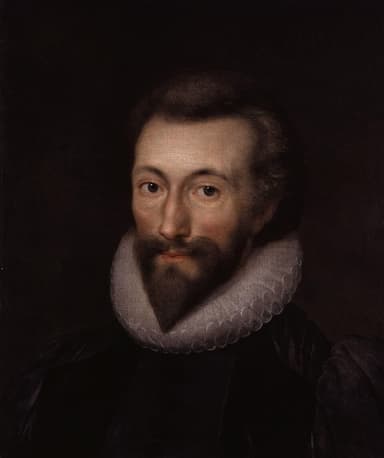
George Herbert was born in Montgomery, Wales, in 1593, into a family that navigated wealth, politics, and the arts with ease. His mother, Magdalen Herbert, supported John Donne, which hints at the intellectual environment in which Herbert was raised. After his father passed away when George was just three, the family moved to England, where Herbert spent most of his life.
He began his studies at Trinity College, Cambridge, in 1609, with aspirations of entering the clergy. However, his plans took an unexpected turn. Herbert was exceptionally bright and driven, and Cambridge quickly recognized his talent. He rose to the position of Public Orator, a prestigious role that had him addressing royalty and dignitaries, and he caught the attention of King James I. For a time, it seemed Herbert might pursue a career at court instead of in the Church. He even served in Parliament in 1624 and briefly in 1625.
“However, the courtly path soon closed off.”
Key patrons passed away, the political landscape changed, and Herbert redirected his focus back to the Church. He was ordained as a deacon in 1626 and became rector of the small parish of Bemerton in Wiltshire in 1630. He dedicated himself to his rural ministry with heartfelt commitment, caring for his congregation and largely funding the rebuilding of the local church out of his own resources.
He succumbed to tuberculosis in 1633 at the young age of 39. In his final years, he wrote the poems that were later compiled in *The Temple*. He sent these to his friend Nicholas Ferrar shortly before his death, asking him to publish them only if he believed they might "do good to any dejected poor soul." Ferrar did publish them, and the book saw eight editions within Herbert's lifetime.