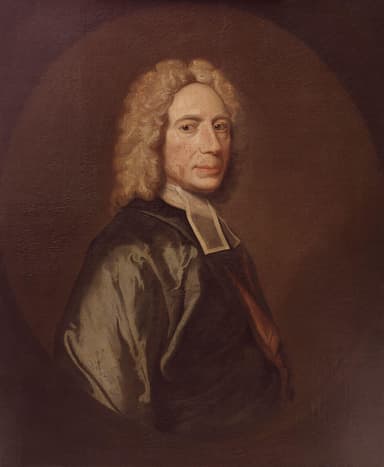
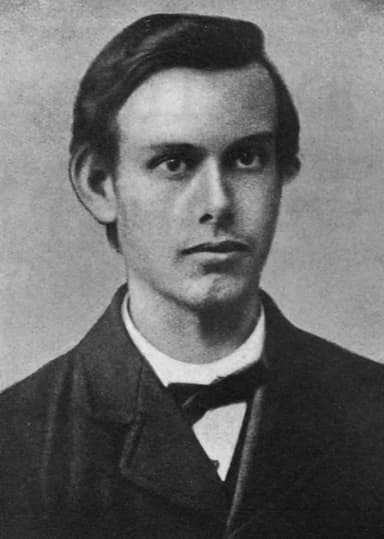
Samuel Johnson was born in Lichfield, Staffordshire, in 1709, as the son of a bookseller—a detail that influenced his entire life. Surrounded by books but lacking financial means, he developed a fierce intellect that never quite received the institutional support it deserved. He attended Pembroke College, Oxford, but had to leave without a degree because he couldn't afford to continue. This gap between his talents and his circumstances weighed on him for many years.
In 1737, he moved to London with his former pupil David Garrick, who would become the most celebrated actor of the time. Johnson struggled to make ends meet as a journalist and hack writer, crafting political reports, essays, and critiques for anyone willing to pay. He experienced poverty not as a distant concept but as a daily reality—complete with bailiffs, debt, and cold rooms.
“His poem *The Vanity of Human Wishes* (1749) pulled him from obscurity.”
This moral satire, in the tradition of Juvenal, examined the ruins of human ambition with a clear-eyed, unsentimental perspective. It was the first work he published under his own name. Following that, his periodical essays in *The Rambler* (1750–52) and *The Idler* (1758–60) helped him build a serious readership.
The project that consumed almost a decade of his life was *A Dictionary of the English Language*, published in 1755. He largely wrote it by himself, with a small team of copyists, and it contained over 42,000 entries. While it wasn't the first English dictionary, it was the first to use literary quotations as evidence of how words functioned in practice. This work set the standard for over a century.