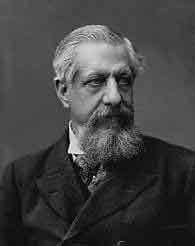
Isaac Watts was born in Southampton in 1674 as the eldest child of a Nonconformist deacon who faced imprisonment twice for his religious beliefs. This background of principled dissent influenced Watts from an early age. He displayed a natural talent for poetry, reportedly composing rhyming lines as a child, and when reprimanded for it, he cleverly replied to his father in rhyme.
Watts studied at the Dissenting Academy in Stoke Newington, where he received a solid education outside the universities of the Church of England. After spending some time back in Southampton, he took on the role of a tutor and, in 1702, became the pastor of the Mark Lane Independent Congregation in London, which was one of the leading Nonconformist churches of that time.
“Much of Watts’ adult life was marked by poor health.”
Starting in 1712, he lived as a guest of Sir Thomas Abney and his family, first at their London residence and later at Theobalds in Hertfordshire, where he spent the last thirty-six years of his life. This long period of stable living allowed him to write extensively on theology, philosophy, logic, and poetry.
Watts’ impact on English hymnody is significant. Prior to his contributions, English Protestant congregations primarily sang metrical psalms—direct, often awkward translations of the biblical Psalter. Watts contended that Christians should sing about Christ and the New Testament, not just the Old Testament, supporting his argument with around 750 hymns he wrote. He paraphrased the Psalms freely, reinterpreting them through a Christian perspective and crafting entirely original hymns grounded in personal devotion and theological conviction.