Skip to content

The Poet Index · Entry 100

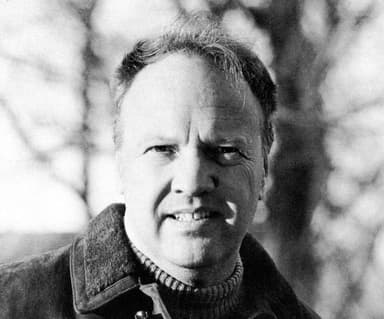
Robert Graves
Poems

Lifespan
1895–1985
Nationality
United Kingdom
Indexed Works
1

This statement clearly captures Graves's belief about the purpose of poetry: it's a reflection on language as both a refuge and a form of loss.

Editorial intro

Nikola Gulevski, Editor, Storgy

About our editor →

Editorial intro

Robert Graves spent seven decades writing poetry governed by a single, strange conviction: that all real poetry is a form of devotion to one mythological female figure, a White Goddess who presides over birth, love, and death. That idea sounds eccentric until you read the poems, at which point it feels less like a theory and more like a confession. No other major English poet of the twentieth century built an entire body of work around that kind of mythic obsession and made it feel this personal, this controlled, and this consistently beautiful.

Graves occupies an unusual position in the literary landscape, which contributes to his significance. He was a contemporary of T.S. Eliot and W.H. Auden but steered clear of modernist experimentation — his poems are formally tight, direct, and stripped of any performance. Readers who approach him through *I, Claudius* or *Goodbye to All That* are often surprised to find verse that is quiet and precise rather than war-haunted or theatrical. Another surprise is tenderness: poems like "She Tells Her Love While Half Asleep" resonate more than anything you would expect from a writer so linked to battlefields and classical history. Start with the *Collected Poems* and follow the myth wherever it leads.

Where to start

The Works

Sort byYearTitle
  1. 01The Cool Web1927

Recurring themes

Biographical record

About Robert Graves

Robert Graves was born in 1895 in Wimbledon, London, into a family where literature was simply part of everyday life. His father, Alfred Perceval Graves, was a notable Irish poet and a key figure in the Gaelic cultural revival, which meant Robert grew up immersed in myth, verse, and a deep appreciation for the old stories. That Celtic influence stayed with him throughout his life.

He attended Charterhouse School and soon after, enlisted in the First World War. Serving as an officer in the Royal Welch Fusiliers, he was severely wounded at the Battle of the Somme in 1916, to the point where he was reported dead. Though he survived, the war left him with deep scars that echoed in his poetry for years — an ongoing focus on violence, survival, and the complex guilt of returning home.

After the war, Graves enrolled at Oxford and began to carve out a literary career.

His friendship with American poet Laura Riding became pivotal in his life. They spent over a decade living and working together, co-managing a small press and challenging each other's poetic ideas. When their relationship came to an end, Graves moved to the island of Majorca, Spain, where he would spend most of his remaining years.

He is likely best known to casual readers for his prose: the autobiographical memoir *Goodbye to All That* (1929), which offers one of the sharpest insights into the true experience of the First World War, and the historical novels *I, Claudius* and *Claudius the God* (1934), which reimagined ancient Rome with a novelist's keen eye for power and betrayal. However, Graves always saw himself primarily as a poet, producing a vast body of verse over seven decades.
Biographical span
1895Birth
1985Death
1927Median work

Poets in the same orbit

Reader questions

Frequently asked