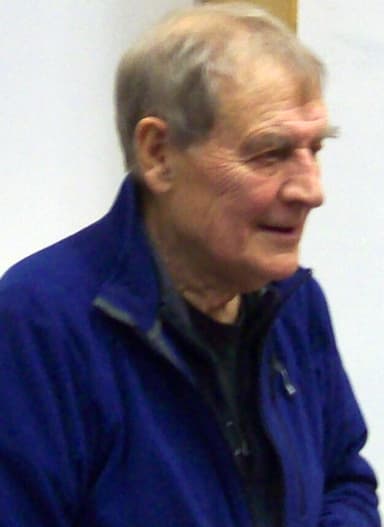
Dudley Randall was born in Washington, D.C., in 1914 and grew up in Detroit, Michigan, a city that significantly influenced his life and work. He began writing poetry as a child and published his first poem at thirteen in the Detroit Free Press. His journey to becoming a prominent literary figure was far from straightforward; he worked in the foundry at Ford Motor Company, served in the Pacific during World War II, and earned degrees in English and library science before embarking on a career as a librarian.
It was that librarian's instinct—the belief that books should reach people—that inspired his most impactful act. In 1965, Randall founded Broadside Press in Detroit, initially to publish a single poem as a broadside. What began as a small, practical effort evolved into one of the most significant publishing ventures in American literary history. At a time when mainstream publishers were mostly overlooking Black writers, Broadside Press provided a platform for voices that would shape the Black Arts Movement and beyond: Sonia Sanchez, Audre Lorde, Gwendolyn Brooks, Etheridge Knight, Margaret Walker, and Melvin Tolson, among many others. Randall managed the press with minimal resources and a strong sense of purpose, transforming the landscape of American poetry.
“His own poetry is straightforward and emotionally resonant.”
He wrote in various forms—ballads, sonnets—but never allowed the structure to overshadow the emotion. His most renowned poem, "Ballad of Birmingham," was written in response to the 1963 bombing of the 16th Street Baptist Church in Alabama, where four young Black girls lost their lives. The poem unfolds through the voices of a mother and daughter, striking with the power of a folk song. It became one of the iconic poems of the Civil Rights era.
Randall was named the first Poet Laureate of Detroit in 1981, a recognition that felt well-deserved—he had dedicated decades to enriching the literary life of the city and the nation. He passed away in 2000, leaving behind a legacy of work and an institution that transformed who gets to be heard in American poetry.