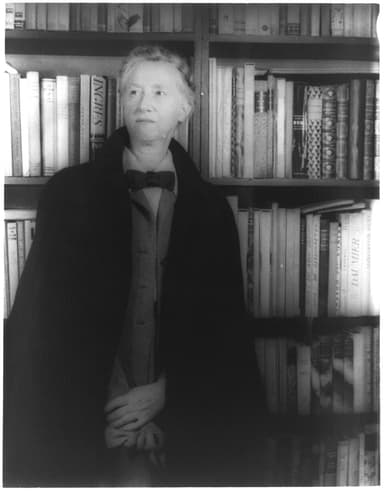
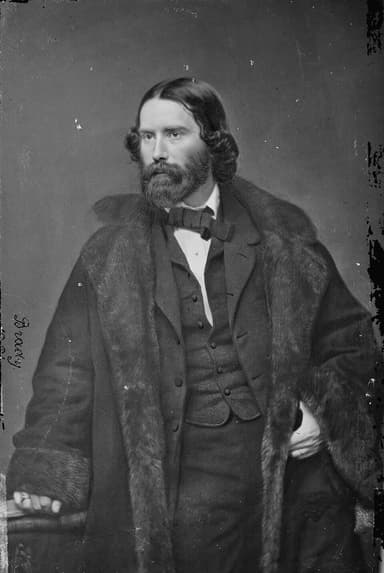
Stephen Spender was born in London in 1909 into a family deeply rooted in literature and journalism—his father was a prominent liberal journalist, and this commitment to public engagement stayed with him throughout his life. He attended University College Oxford, where he connected with a remarkable group that included W.H. Auden, Louis MacNeice, and C. Day-Lewis. This circle would go on to shape a distinctive style of British poetry in the 1930s: politically charged, creatively innovative, and sharply aware of the looming crisis in Europe.
Spender's political awareness grew during the Spanish Civil War, which drew in a generation of left-leaning writers. In 1937, he briefly joined the Communist Party, partly out of solidarity with the Republican side, but left just months later—his disillusionment with Soviet-style communism would deepen in the subsequent decades, culminating in his contribution to *The God That Failed* (1949), a collection of essays by former communists reflecting on their departure from the movement.
“Throughout the 1930s and 1940s, he crafted poetry that sought to balance two opposing elements: the lyrical tradition he cherished and a conscience that constantly nudged him toward social and political themes.”
His poem "The Express" exemplifies this blend, taking an industrial subject—a steam locomotive—and treating it with the same reverence a Romantic poet might reserve for a natural landscape. This tension between beauty and machinery, as well as between the personal and the collective, permeates much of his work.
In 1939, he co-founded the influential literary magazine *Horizon* with Cyril Connolly and later co-edited *Encounter*. However, his association with the latter became a source of lasting embarrassment when it was revealed in the 1960s that the magazine had received covert funding from the CIA.