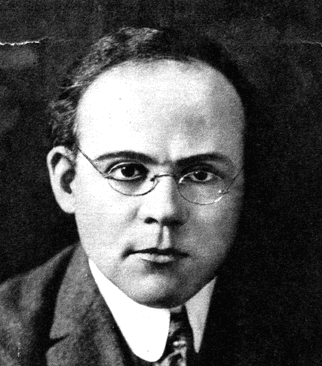
Primo Levi was born in Turin in 1919 to a middle-class Jewish family and spent nearly his entire life in that city, which makes the rupture caused by his deportation all the more striking. He pursued a chemistry degree at the University of Turin, graduating in 1941 under the racial laws imposed by the Fascist government on Italian Jews, which required the university to indicate his Jewish heritage on his diploma.
After Italy's armistice with the Allies in 1943, Levi joined a small partisan group in the mountains near Turin. He was captured by the Fascist militia in December of that year, and once they identified him as Jewish, he was handed over to the Germans and deported to Auschwitz in February 1944. His chemistry background helped him survive, as he was assigned to work at a synthetic rubber plant operated by IG Farben. In January 1945, he was in the camp infirmary, too sick to march, when the SS abandoned Auschwitz ahead of the Soviet advance. That stroke of luck saved his life.
“The journey back home took almost a year, winding through Eastern Europe and the Soviet Union—an experience he later recounted in *The Truce*.”
Once back in Turin, he resumed work as an industrial chemist and eventually became the manager of a paint factory, holding that position for thirty years while writing during evenings and weekends.
His first book, *If This Is a Man*, faced rejection from Einaudi and several other publishers before a small press finally released it in 1947. It had modest sales and soon faded into obscurity. However, Einaudi published it again in 1958, and it gradually came to be recognized as one of the crucial documents of the twentieth century—not for its emotional outbursts, but for its careful observations. Levi wrote about Auschwitz with a scientist's precision and the commitment of someone who felt that bearing witness was a moral duty rather than a means of personal healing.