Skip to content

The Poet Index · Entry 001

Edgar Allan Poe
Poems

Lifespan
1809–1849
Nationality
United States
Indexed Works
7

It's the poem that turned Poe into a household name, and its unyielding rhythm along with the repeated single-word refrain showcase his technical skill at its peak.

Editorial intro

Nikola Gulevski, Editor, Storgy

About our editor →

Editorial intro

Edgar Allan Poe invented the detective story, not as a rough draft that others improved, but as a fully formed template that Conan Doyle, Agatha Christie, and virtually every crime writer since have been working inside of. That alone would be enough. But Poe was also doing something in his poems that English-language poetry had not quite done before: treating sound as an argument, building a case through rhythm and repetition until the music itself became the meaning.

He occupies a strange place in the literary landscape, canonized in America but arguably more influential in France, where Baudelaire and Mallarmé translated him and used his ideas as the engine of Symbolism. Modern readers coming to Poe for the first time are usually surprised by two things: how funny he could be, and how disciplined. The gothic gloom is real, but it is controlled. The obsessive meter of "The Raven" or "Annabel Lee" is not a party trick; it is a deliberate theory of how a poem should work, one Poe actually wrote out in his essay "The Philosophy of Composition." He is one of the few poets who left instructions, and following them back into the work changes what you hear.

Where to start

The Works

Sort byYearTitle
  1. 01Annabel LeeUndated
  2. 02ApparitionUndated
  3. 03EldoradoUndated
  4. 04From the RavenUndated
  5. 05RomanceUndated
  6. 06The BellsUndated
  7. 07The RavenUndated

Recurring themes

Biographical record

About Edgar Allan Poe

Edgar Allan Poe was born in Boston in 1809 to two traveling actors. His father left the family early on, and his mother passed away from tuberculosis before he was three. He was taken in by John and Frances Allan in Richmond, Virginia, though he was never formally adopted, and it was from John Allan that he got his middle name.

Poe’s relationship with John Allan was troubled from the beginning and never truly healed. He briefly attended the University of Virginia in 1826 but accumulated gambling debts, leading Allan to withdraw him and refuse to pay for his education. Afterward, Poe went to West Point, but he intentionally arranged for his own dismissal in 1831. By that time, he had already published two poetry collections, funded almost entirely by himself and receiving little public attention.

The 1830s and 1840s were filled with hard work for Poe.

He served as an editor and critic for various magazines in Richmond, Philadelphia, and New York, where he gained a reputation for being a sharp and sometimes harsh reviewer. Although he was effective in his role and helped increase the magazines' circulations, he was never paid enough to feel secure. In 1835, he married his cousin Virginia Clemm when she was thirteen and he was twenty-seven. Her prolonged illness and eventual death from tuberculosis in 1847 left him heartbroken.

Poe shot to fame with the publication of "The Raven" in January 1845, which quickly became popular nationwide, with people reciting it on the streets. However, this fame did not bring financial stability. He continued to struggle with heavy drinking, a habit that had plagued him for years and cost him more than one editorial job.
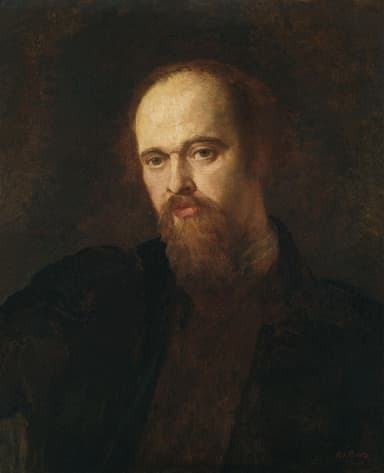
Biographical span
1809Birth
1849Death

Poets in the same orbit

Reader questions

Frequently asked