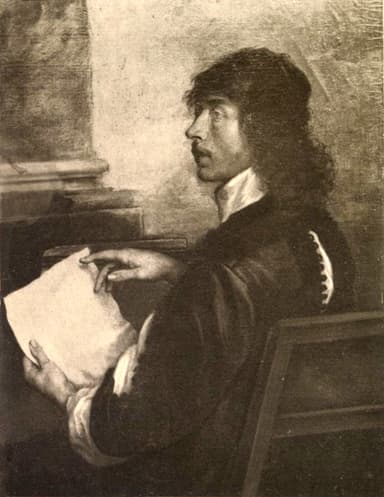
Christopher Marlowe — known as Kit to his friends — was born in Canterbury in 1564, the same year as William Shakespeare. In his brief 29 years, he packed more drama into his life than most authors do in a lifetime. The son of a shoemaker, he earned a scholarship to Corpus Christi College, Cambridge, studying on a grant originally intended for future Church of England ministers. However, he never took holy orders. Instead, he spent significant time away from Cambridge under mysterious circumstances, leading the university to initially deny him his Master's degree. The Privy Council intervened, suggesting he had been engaged in work "in matters touching the benefit of his country" — a common euphemism in Elizabethan times for intelligence work. Whether Marlowe was indeed a spy is still up for debate, but this incident hints at the extraordinary life he led.
By his mid-twenties, he was the most talked-about playwright in London. His play *Tamburlaine* created a new standard for the Elizabethan stage, featuring a larger-than-life protagonist who defied limits on ambition. Marlowe was the first English dramatist to make blank verse feel dynamic rather than rigid, which alone would have earned him lasting fame. Following *Tamburlaine*, he wrote *Doctor Faustus*, *Edward II*, and *The Jew of Malta*, each challenging the boundaries of what audiences and censors would accept.
“Marlowe’s poetry, while a smaller collection, is equally striking.”
"The Passionate Shepherd to His Love" stands out as one of the most imitated poems in English literature — a simple, almost innocent invitation to enjoy the countryside that has inspired countless responses, parodies, and variations since Sir Walter Raleigh penned his famous reply. Marlowe also translated Ovid's *Amores* and created a compelling version of Lucan. His narrative poem *Hero and Leander* was left unfinished at his untimely death.
That death occurred in Deptford on 30 May 1593. The official story claims he was stabbed above the right eye during a dispute over a tavern bill with a man named Ingram Frizer. The three other men present had ties to the intelligence community. Just days before, Marlowe had been summoned by the Privy Council following allegations of atheism and blasphemy. Speculations about what truly transpired — whether it was a political assassination, a faked death, or simply a quarrel that escalated — have persisted ever since. The truth remains elusive.