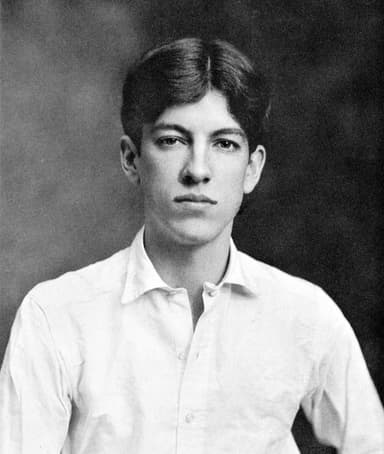
Rudyard Kipling was born in Bombay in 1865, and the city had a lasting impact on him. He spent his early years immersed in the sounds, smells, and languages of British India, looked after mostly by Indian servants, and experiencing a world that most English kids never encountered. At the age of six, he was sent back to England for school—a harsh transition that he later described as a form of abandonment—and lived with a family in Southsea whose strict, joyless household made for some of the unhappiest years of his life.
He found his stride at the United Services College in Devon, a school for the sons of military officers, and by his late teens, he was back in India working as a journalist in Lahore. This second immersion in Indian life—the bazaars, the barracks, the colonial machinery at work—directly inspired his early fiction and poetry. Stories and verses flowed from him quickly, and by the time he returned to England in 1889, he was already being discussed as a fresh and necessary voice in English literature.
“The 1890s brought him fame on both sides of the Atlantic.”
*Barrack-Room Ballads* (1892) gave ordinary soldiers a voice that felt authentic rather than decorative, and the two *Jungle Books* (1894–95) solidified his reputation as a storyteller who could write for both children and adults without patronizing either group. In 1907, he became the first English-language writer to win the Nobel Prize in Literature.
His personal life was marked by deep sorrow. His son John was killed at the Battle of Loos in 1915, and Kipling dedicated years afterward to identifying and honoring the war dead through his work with the Imperial War Graves Commission. This loss changed him, and the poems he wrote later in life carry a weight that his earlier, more boastful work lacks.