Skip to content
Storgy

The Poet Index · Entry 575

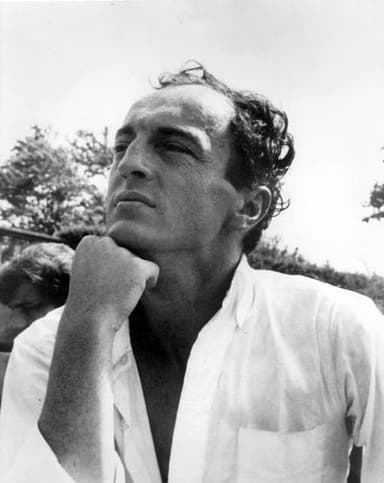
Joe Brainard
Poems

Lifespan
1942–1994
Nationality
United States
Indexed Works
0

Joe Brainard was born in Salem, Arkansas, in 1942 and grew up in Tulsa, Oklahoma, where he stood out for his serious approach to drawing and creating.

Editorial intro

Storgy editorial

Editorial intro

Joe Brainard invented a book that serves as a poem, a memoir, and a conceptual artwork simultaneously, using a single repeated phrase. *I Remember*, constructed entirely from short fragments each starting with "I remember," captures mid-century American life like a shoebox of photographs: casually, honestly, and with more emotional weight than expected. Paul Auster regarded it as one of the few genuinely original books he had ever read, and Georges Perec appreciated it enough to create a French version inspired by it.

Brainard emerged from the New York School alongside Frank O'Hara, John Ashbery, Ted Berrigan, and Ron Padgett, influencing that circle visually as well as verbally — he designed book covers, illustrated poems, and transformed comics into something truly literary. First-time readers are often surprised by his openness. There is no performance of depth or straining for significance. The memories shift from trivial to tender without warning, and that flatness is central to the work. He was openly gay during a time when that posed real risk, and his writing expresses desire and friendship with calm and undefensive clarity. He ceased making art in the mid-1970s and passed away from AIDS in 1994, but *I Remember* continues to attract new readers, which is characteristic of a book that belongs to everyone.

Recurring themes

Biographical record

About Joe Brainard

Joe Brainard was born in Salem, Arkansas, in 1942 and grew up in Tulsa, Oklahoma, where he stood out for his serious approach to drawing and creating. In the early 1960s, he moved to New York City and quickly became part of the New York School — a vibrant community of poets, painters, and musicians who believed that the arts should intertwine and that seriousness and playfulness could coexist.

Primarily, Brainard was a visual artist. He created collages, assemblages, paintings, and drawings with a restless energy, and he also designed book covers, theater sets, and costumes for friends and collaborators. Yet, he was also a writer, and the boundary between these two aspects of his work was never rigid. He collaborated with poets like Frank O'Hara, John Ashbery, Ted Berrigan, and Ron Padgett, and he elevated comics — then seen as lowbrow and disposable — into a form of genuine poetry. His readiness to embrace the vernacular and to find art in what others often discard permeates all his creations.

His most enduring work is *I Remember*, a memoir crafted entirely from short prose fragments, each beginning with "I remember." What started as a small project in 1970 expanded over several years into something that resists easy labels — it's a memoir, certainly, but also a poem, a conceptual artwork, and a glimpse into mid-century American life seen through the candid eyes of one individual. The memories range from the mundane to the heart-wrenching, and collectively, they create a quietly powerful impact. Paul Auster described it as one of the few truly original books he had ever read, which is not an exaggeration. The book has inspired numerous imitations and exercises, and Georges Perec adapted its form for his own French-language version.

Brainard was openly gay during a time when that posed significant risks, and his work exhibits a candid, warm, and unsentimental exploration of desire, friendship, and the nuances of everyday life. He was generous to his friends — often creating art specifically for them, illustrating their books, and contributing to their magazines — and this generosity influenced the entire community around him.

He largely stopped making art in the mid-1970s, withdrawing from the New York art scene for reasons he never fully disclosed. Brainard passed away from AIDS-related pneumonia in New York City in 1994, at the age of fifty-two. Since then, his reputation has steadily grown, and *I Remember*, in particular, has attracted new readers with each passing decade.
Biographical span
1942Birth
1994Death

Poets in the same orbit

Reader questions

Frequently asked

Was Joe Brainard a poet or a visual artist?

Both, genuinely. He trained and worked mainly as a visual artist—collage, painting, assemblage—but he approached writing with equal seriousness, never seeing the two as distinct careers. His most renowned piece, *I Remember*, seamlessly bridges both realms.

What is *I Remember* and why is it so influential?

*I Remember* is a memoir composed of hundreds of short fragments, each starting with "I remember." Brainard developed it over several years beginning in 1970. Its appeal lies in the mix of radical honesty and structural simplicity—stripping away the typical memoir elements like narrative arcs, self-justification, and dramatic pacing to focus solely on the memories, which are presented plainly. Since then, writers and educators have adopted this form, and French author Georges Perec created his own version, directly inspired by Brainard's work.

What was the New York School and how did Brainard fit into it?

The New York School was a group of poets and painters active in the mid-twentieth century, including notable figures like Frank O'Hara, John Ashbery, Kenneth Koch, and Larry Rivers. They believed that art should be vibrant and reflective of the present, engaging in conversation and drawing inspiration from painting, music, and popular culture. Brainard was a perfect match for this ethos; he was always collaborating, illustrating books, designing covers, and applying his artistic vision to all his work. He also played a key role in maintaining the social fabric of the community.

Why did Brainard stop making art in the 1970s?

He distanced himself from the art world around the mid-1970s and never really made a comeback. He never offered a clear public reason. Some say he was unhappy with the commercial side of art, while others suggest personal issues played a part. He lived a quiet life in New York until he passed away in 1994.

How did Brainard use comics in his work?

He embraced the visual style of American comics — panels, speech bubbles, bold outlines — and transformed it into a serious artistic and poetic medium at a time when very few in the fine art world were doing so. He teamed up with New York School poets to produce works that merged comic strips and poetry, using the form to express real emotions rather than just humor or entertainment.

Is *I Remember* easy to read if you don't usually read poetry?

It’s one of the easiest literary works to dive into from the twentieth century. Each piece is just a sentence or two, written in straightforward language, and you can start reading from any page. Readers who feel daunted by poetry often find *I Remember* to be refreshingly approachable — it feels like someone is simply sharing their thoughts, which is precisely the point.

How did Brainard's sexuality shape his work?

He was openly gay and wrote about desire, attraction, and gay life with a straightforwardness that was rare for his time. In *I Remember*, memories of sexual awakening and longing are woven together with recollections of television jingles and school lunches — all presented with the same candid honesty. This refusal to treat some experiences as more significant than others is what makes the book resonate so deeply.

Where should someone start if they want to explore Brainard's visual art?

The catalogue from the 2001 retrospective at the Tibor de Nagy Gallery is a helpful resource, and the Drawing Center in New York has featured his work as well. His collages and assemblages deserve a closer look—they share the same qualities as his writing: humorous, precise, and subtly touching.