Skip to content

The Poet Index · Entry 1056

Billy Collins
Poems

Lifespan
b. 1941
Nationality
United States
Indexed Works
1

It's the ideal way to introduce Collins's method: a comic setup that unexpectedly unfolds into something truly beautiful and unusual.

Editorial intro

Nikola Gulevski, Editor, Storgy

About our editor →

Editorial intro

Billy Collins built a readership for contemporary poetry that no other American poet of his generation came close to matching, not by dumbing the work down, but by making the entrance feel like a door left open rather than a test to pass. His poems start somewhere familiar: a cup of coffee, a dog on the floor, a lazy Tuesday morning, and then they pivot. That pivot is everything. One moment you're smiling at a domestic detail, and the next you're contemplating mortality or the strangeness of being conscious at all. The humor isn't decoration; it lowers your guard just before the sadness lands.

He served as U.S. Poet Laureate from 2001 to 2003 and became, improbably, one of the best-selling poets in America — a phrase that almost never applies to living poets. His influence shows up in any contemporary poet who trusts a plain sentence or earns a quiet ending rather than announcing it. First-time readers are often surprised by two things: how genuinely funny the poems are and how much weight they carry by the final line. Collins never signals that weight coming. That restraint demonstrates the craft, and it's harder to pull off than it looks.

Where to start

The Works

Sort byYearTitle
  1. 01Questions About AngelsUndated

Recurring themes

Biographical record

About Billy Collins

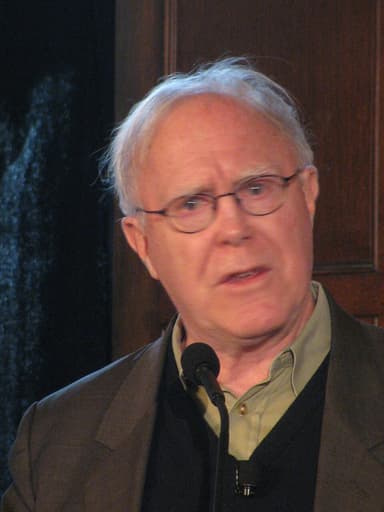
Billy Collins, whose full name is William James Collins, was born in New York City in 1941 and has spent most of his life in and around the city that shaped his perspective: wry, observant, and quietly philosophical. He earned his undergraduate degree from the College of the Holy Cross and later completed a PhD at the University of California, Riverside. For decades, he taught English at Lehman College, part of the City University of New York, eventually becoming a Distinguished Professor before retiring in 2016. He subsequently joined the MFA faculty at Stony Brook Southampton.

Collins gained wide public attention relatively late in his career. He served as the United States Poet Laureate from 2001 to 2003, a period that coincided with a genuine increase in his readership—he became one of the best-selling poets in America, a phrase not commonly used. In 1992, the New York Public Library honored him as a Literary Lion, and he served as New York State Poet from 2004 to 2006. He was inducted into the American Academy of Arts and Letters in 2016.

What distinguishes Collins is the contrast between the approachability of his poems and the depth of their content.

A typical Collins poem begins with something small and domestic—a cup of coffee, a dog sleeping on the floor, a student reading a poem—and then takes a turn that is either humorous, melancholic, or both. He has a talent for the pivot: the moment when an ordinary scene reveals something larger about time, mortality, or the oddness of being alive. Critics sometimes dismiss this accessibility as simplistic, but that overlooks the skill involved. The poems are meticulously paced, the humor is sharp, and the sadness, when it appears, hits harder because it is not anticipated.

His collections include *The Apple That Astonished Paris*, *Questions About Angels*, *Picnic, Lightning*, *Sailing Alone Around the Room*, *Nine Horses*, *The Trouble with Poetry*, *Ballistics*, *Horoscopes for the Dead*, and *Aimless Love*, among others. Throughout all of them, the voice remains consistent: a man who pays close attention to the world, slightly amused by it, and more moved by it than he typically shows.
Poets in the same orbit

Reader questions

Frequently asked