Skip to content
Storgy

The writing desk and the library — Issue 708

The writing desk that reads poetry.

The margin counts your syllables as you type. Critique that never writes for you. Free to start. DOCX and PDF export on every plan, forever.

Movement I

Write — poems and stories, each on their own terms.

One desk, two grains. Pick the mode when you start a piece and the editor, the reports and the goals all change with it: stanzas and lines for a poem, chapters and paragraphs for a story.

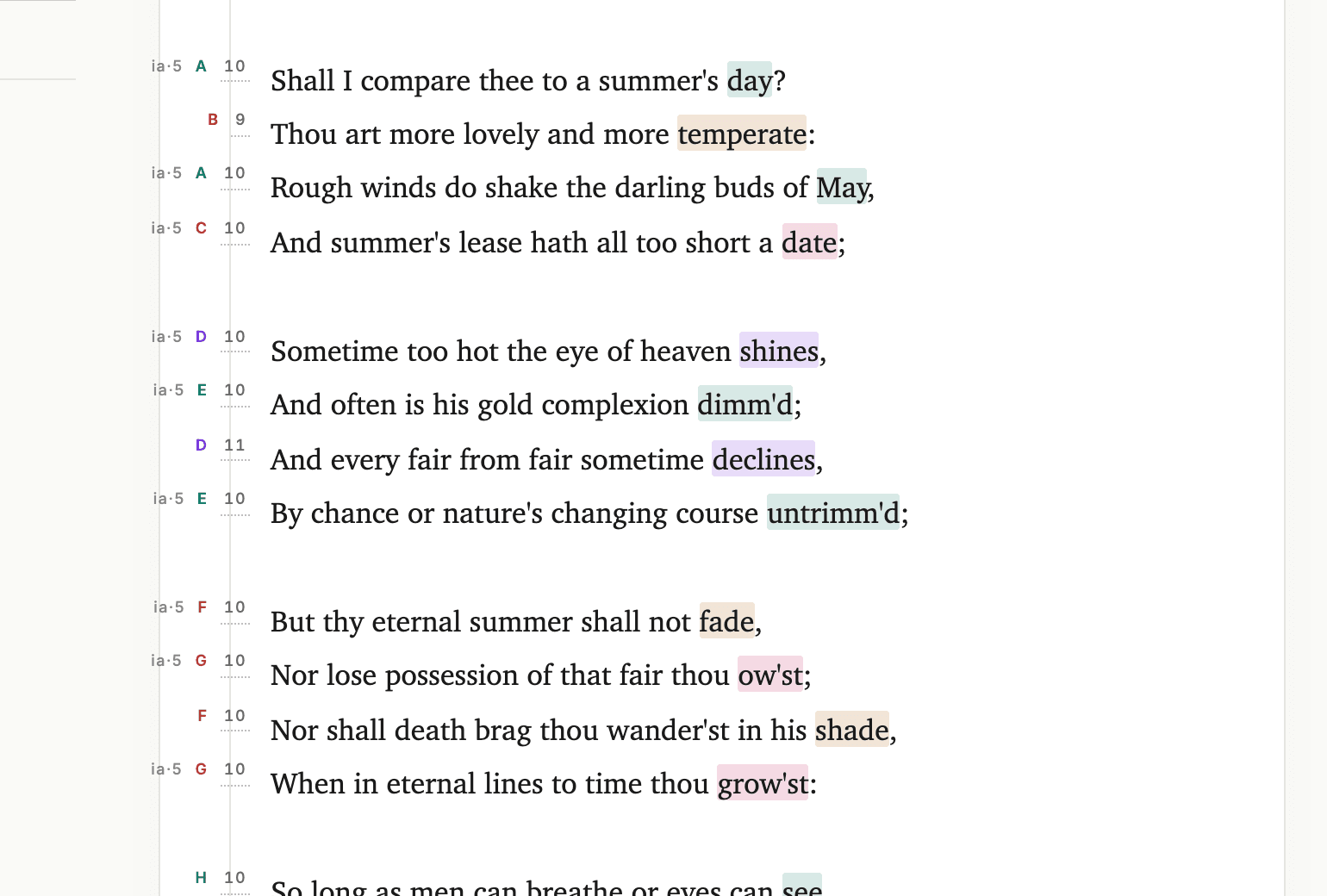
Per-line syllables, meter and rhyme scheme in the margin as you type. Syllables come free on every plan. The metrical reading and the rhyme scheme come with a paid one. Click-to-correct scansion. You can overrule it.

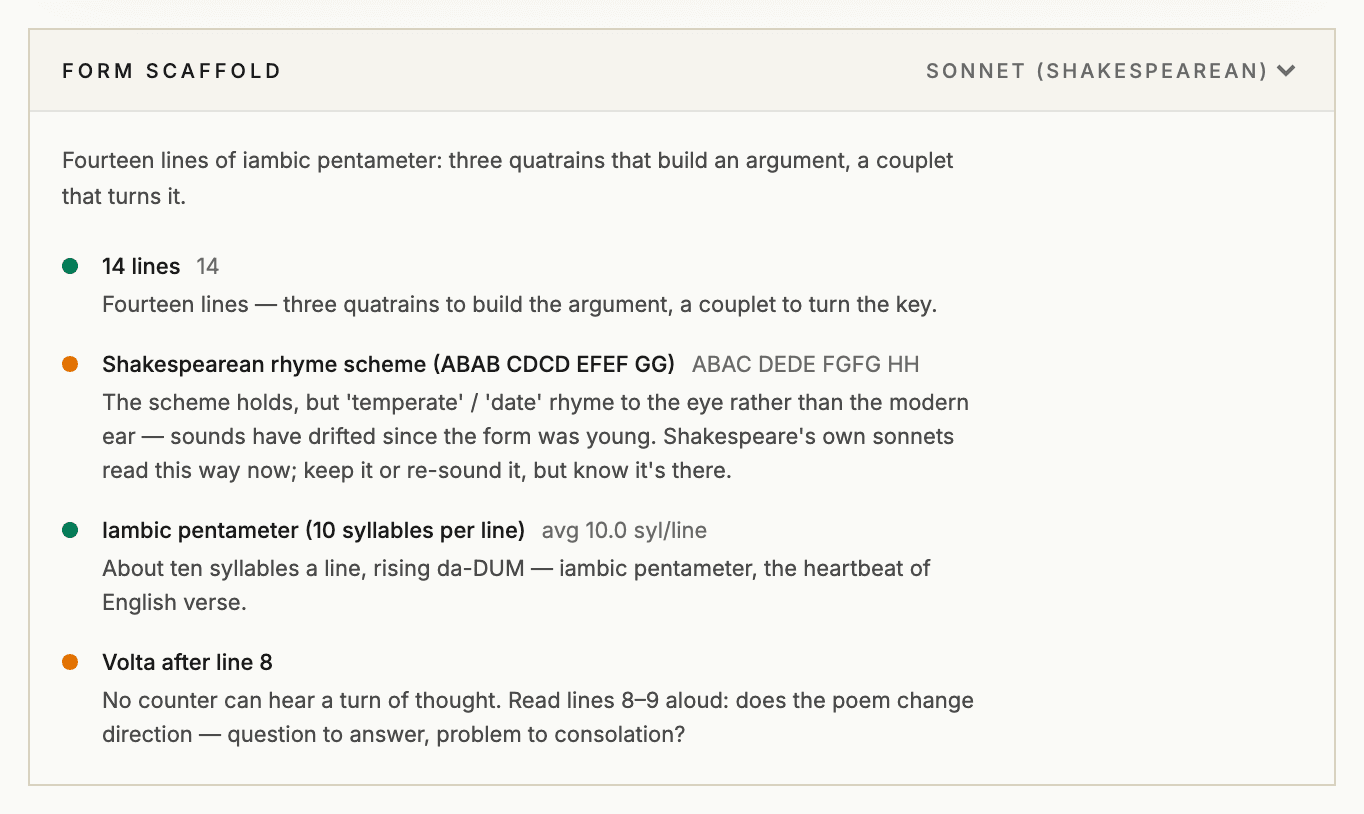
Eight forms that check themselves. Refrains copy down the page, rhyme slots track as you fill them, and eye rhyme grades amber rather than red, because the canonical sonnets use it.

Then the unglamorous half, which matters more. Autosave you can watch, with a visible "Saved 3s ago". Pin any version, label it, restore it without destroying anything. DOCX and PDF export on every plan, forever — the free plan included, a lapsed one included. We will never hold your manuscript.

The form scaffold panel checking a Shakespearean sonnet: line count green, rhyme scheme amber for eye rhyme, syllable average green
Fig. 1A sonnet, grading itself.
Movement II

Improve — a reading anchored to your own lines.

Critique, the Workshop, and the reports

Passage-anchored critique. Select a stanza or a paragraph and ask for a read of exactly that passage, at one credit a run. The price of each AI action is shown before you click it.

Or open the Workshop, a craft conversation that has read your draft, at one credit a message. It is instructed never to draft, rewrite or continue your lines, not even "for example". One hard line in its instructions: you critique, you never ghost-write. Storgy does not generate poems.

One instrument does propose words, and naming it beats burying it: the Poem Checker will suggest a rewrite of a weak line. It is a feature. It costs what any other run costs, and you are free to ignore what it offers.

The fear with a machine reading a poem is that it will say something plausible about a line you never wrote. Every quotation the Poem Rater shows you is verified verbatim against your poem; the ones that fail are deleted. Change one word of a real line and the anchor is destroyed.

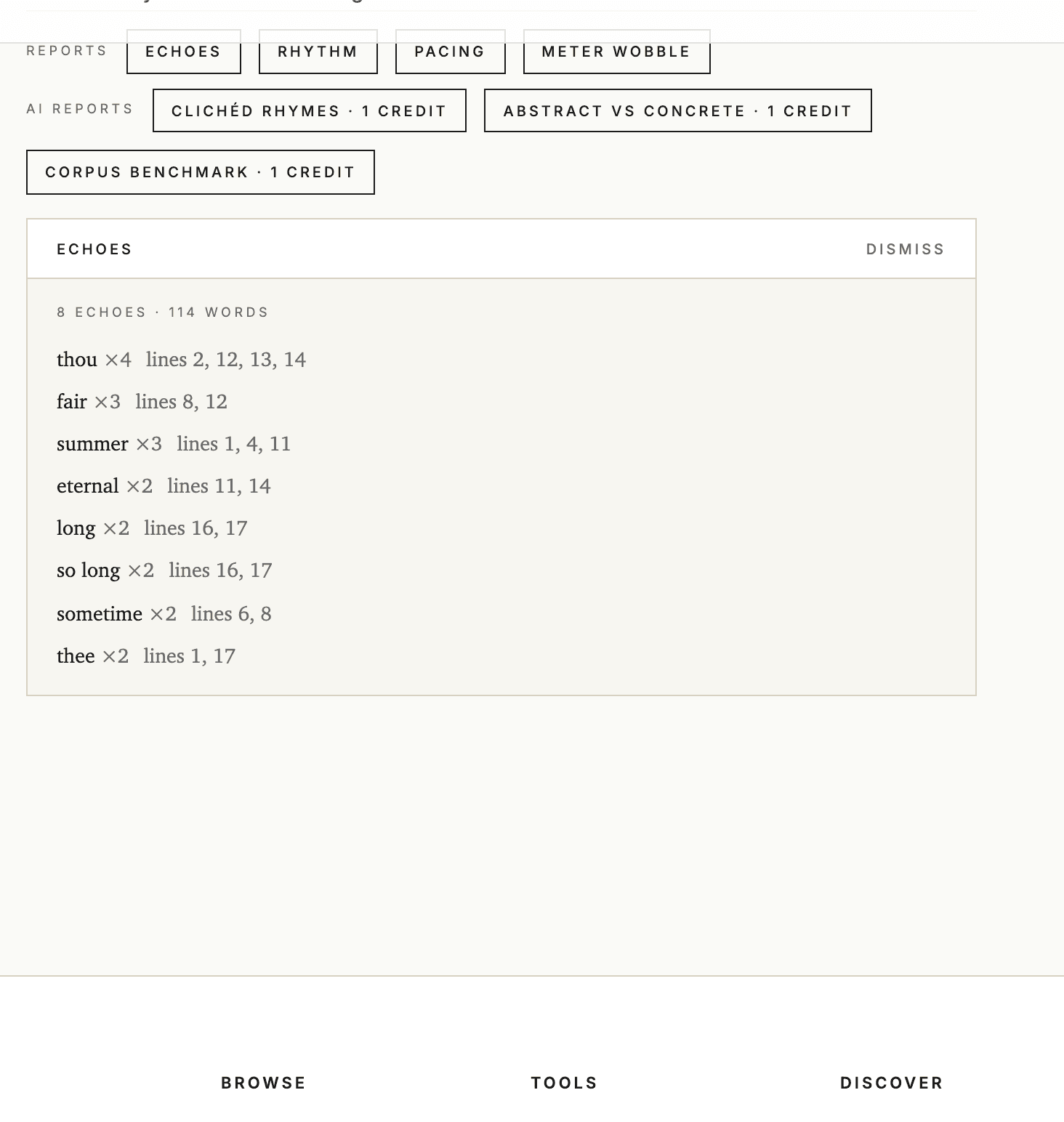
Then the reports. Echoes, Rhythm, Pacing, Dialogue tags and Meter wobble are computed on a paid desk and spend no credits at all. Clichéd rhymes, Abstract vs concrete and the corpus benchmark cost one credit each. The benchmark runs against the public-domain poetry Storgy already holds, so you can see where your sonnet sits among sonnets.
The utility bench

27 instruments. No account needed to try a tool.

Some tools use no AI at all — scansion is arithmetic.

Movement III

Share — what you choose, and nothing else.

A draft at the desk is private. Nothing you write is published anywhere by default; every kind of sharing below is one you switch on, and every one of them you can switch off again.

Pin a version and you can make a share-for-feedback link: nothing indexed, nothing searchable, nothing that appears anywhere on Storgy. Whoever you send it to can comment on a particular stanza, or just leave kudos, without making an account. Creating a link needs a paid plan. Reading and revoking never will.

Movement IV

Bring your poetry to life.

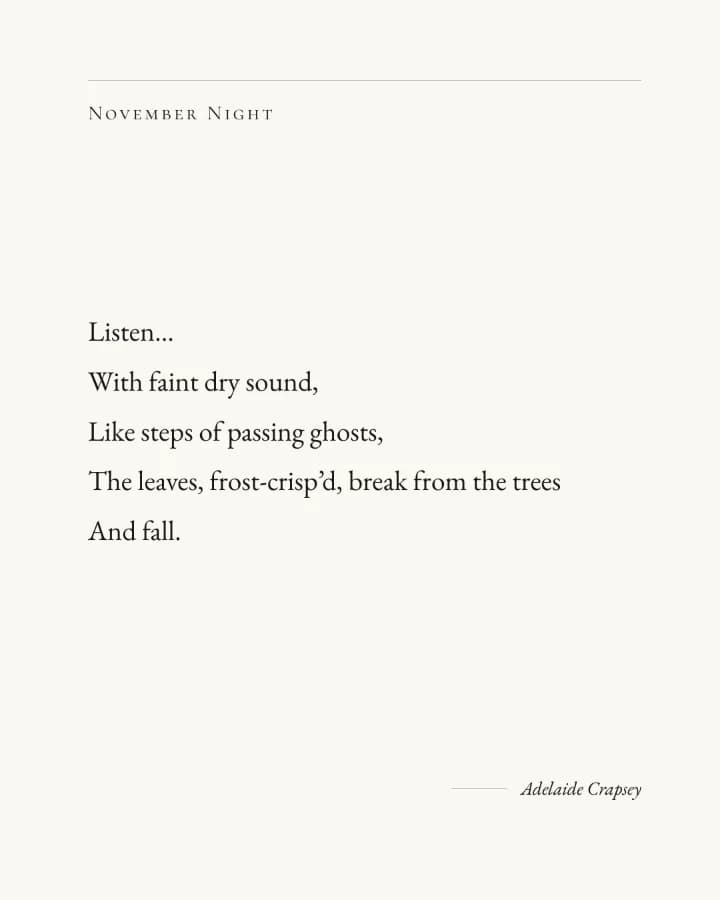
The press sets a finished poem as a made object. Five typeset templates are free, with no account to make: one line set large, a whole poem on a book page, a clean broadside for your own work, and two printable classroom sheets. Lineation preserved exactly. Typeset, not generated. The layout is real typography; no model writes the image.

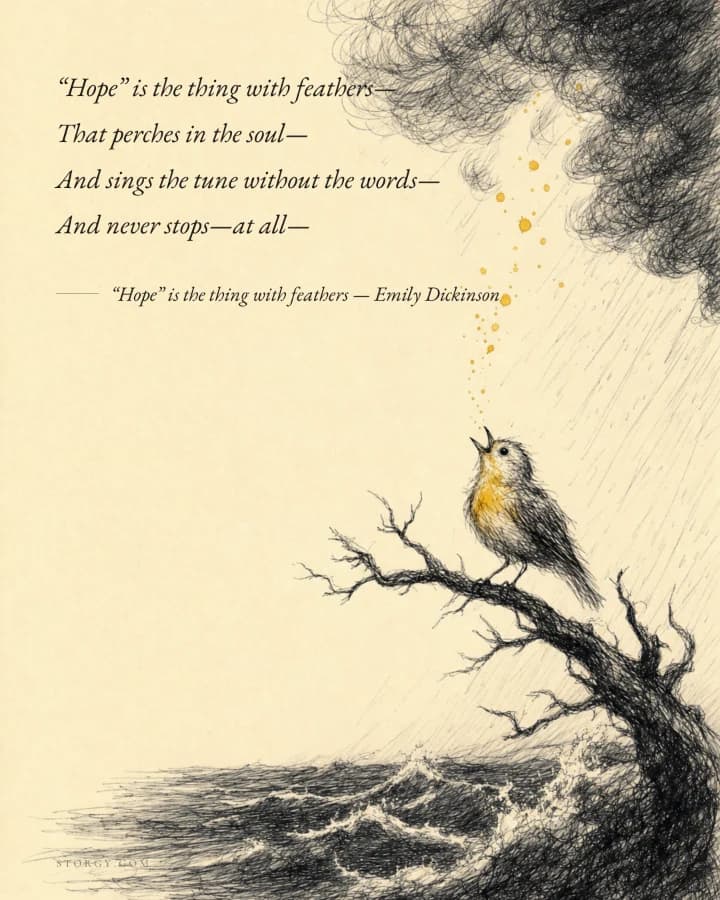
One card draws. Verse & Ink commissions an illustration and costs 5 credits, because the drawing costs us real money.

At the desk, a draft can be read back to you: a fresh reading costs 1 credit, and replaying the same text again is free. The canon is already read. The recitations are free to stream, and pressing play needs no account.

A poem-card specimen: a poem set as a clean broadside, lineation preserved, with no illustration

A typeset card. Free, and no account to make.

Typeset free

Plans

Start free. Upgrade when the margin earns it.

The free desk is a real desk: two projects, the full editor, the syllable count in the margin. Goals and streaks, free on every plan. A paid plan adds the monthly pool of credits, the metrical reading and the rhyme scheme in the gutter, all eight form scaffolds, share links you can create, and a version history that reaches further back.

Starter is $9 a month, billed yearly. One AI run costs one credit. Plus and Pro buy more credits and a longer history, and nothing else.

Cancel in two clicks. We warn you 30 days before a yearly renewal. Refunds are adjusted for what you actually used.

The library

The reference library is free and requires no account. Poems read line by line, the poets who wrote them, study guides for the novels and plays on the syllabus, themed collections that argue for their order, and the recitations.

What's in it

  • 2,534Poems
  • 287Poets
  • 163Study guides
  • 123Themes
  • 152Recitations
  • 190Comparisons
  • 2,150Quizzes
  • 27Tools

The directory

On the method

Storgy is built on the public-domain corpus, line-aligned with original manuscripts where available. Our sources are published. Every poem's public-domain status is verified before it goes live. Themes, rankings, comparisons and quizzes are drafted by Storgy's literary AI from each poem's full analysis, then cached, and every page is re-indexed weekly. No advertising, no infinite scroll — a quiet reading surface.